How to Remove Red Wine Stains from Carpet: DIY Steps + When to Call a Pro (Denver Guide)
To remove red wine stains from carpet, blot immediately with a clean white cloth (never rub), then apply a cold water and mild dish soap solution, blotting until color lifts. Act within minutes — Colorado’s dry air sets stains fast. For dried or old stains, professional hot-water extraction is usually needed for full removal.
Red wine stains are one of the most common emergency calls we get in the Denver metro, especially around the holidays and during football season when living rooms fill up with guests. Here’s the reality: red wine contains tannins and pigments that bond to carpet fibers — nylon, polyester, cotton — fast. Add in Denver’s dry climate, with 300+ sunny days a year and low humidity, and that spill evaporates and sets into the fiber quicker than it would in a humid state. This guide walks through the emergency DIY steps, the mistakes that turn a spill into a permanent stain, and when professional truck-mounted hot-water extraction is the only real fix left.
Why Do Red Wine Stains Set So Fast in Carpet?
Red wine sets fast because of tannins — naturally occurring plant compounds (polyphenols) that chemically bond to carpet fibers through hydrogen bonding and hydrophobic interaction. Once that bond forms, plain water alone often can’t break it back apart.
On top of tannins, red wine carries anthocyanin pigments — the same natural dyes that give wine its deep color. Even a small splash carries a lot of pigment, which is why a tablespoon of spilled wine can look like a much bigger stain than a tablespoon of coffee or juice.
Here’s something we see homeowners get wrong constantly: they scrub instead of blot. Rubbing spreads the stain laterally across the fibers and roughs up the carpet pile, distorting it. Even if you manage to lift some of the color, the spot can look worse afterward because the texture of the carpet is now damaged. Blotting, by contrast, lifts the liquid up and out of the fibers instead of grinding it further in.
Water temperature matters too. Cold water dilutes the wine and helps lift the dye out. Hot water does the opposite — it can set certain carpet treatments and actually drive the pigment deeper into the fiber. This is one of the biggest mistakes we see, and we’ll cover it again below because it’s that important.
Here in Denver, our low-humidity, high-altitude air means spills evaporate faster than they would in a humid climate. That shrinks your ‘safe window’ for full removal — ideally you want to be treating the stain within the first 15 minutes. After 24 to 48 hours, the tannins and pigments have had time to fully bond, and getting the stain out becomes significantly harder, sometimes requiring professional-strength treatment.
How to Get Wine Out of Carpet: Step-by-Step DIY Methods
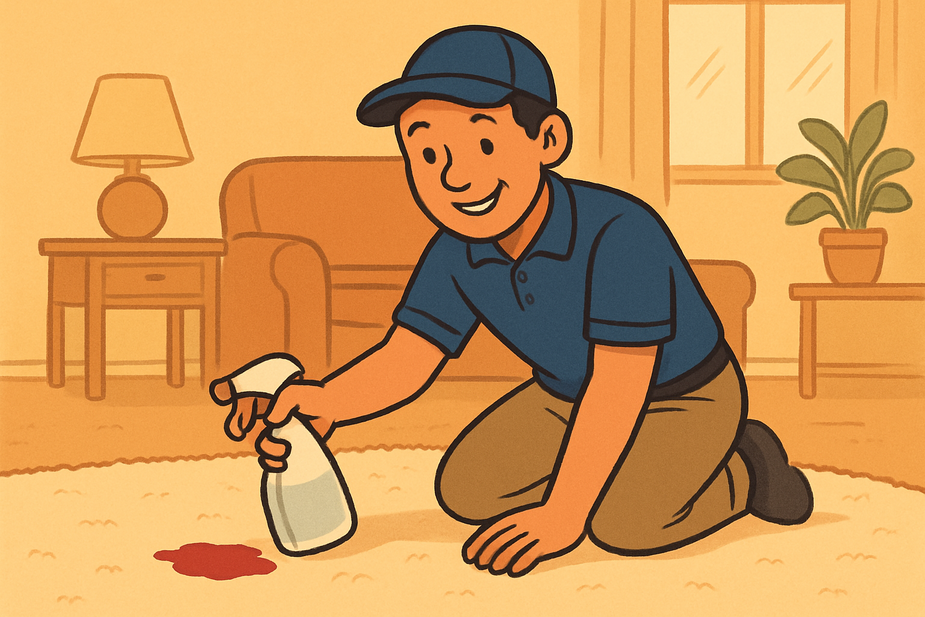
Immediate First Aid (First 5 Minutes)
The first five minutes matter more than anything else you’ll do. Here’s exactly what to do:
- Grab a clean, white cloth or plain white paper towels. White matters — colored or patterned cloths can bleed their own dye onto your carpet, adding a second stain to the first.
- Blot with firm, downward pressure. Press down, then lift straight up. Don’t scrub, don’t twist, don’t grind the cloth into the fibers.
- Work from the outer edge of the stain inward. This keeps the wine from spreading outward into clean carpet.
- Swap in a fresh section of cloth as soon as one area gets saturated with color. Reusing a soaked section just pushes the wine back into the carpet.
- Keep repeating until blotting produces little to no color transfer onto the cloth.
This first stage alone, done correctly, can remove 50-80% of a fresh spill before you ever apply any kind of cleaning solution. It’s the single most important step in this whole process.
Method 1 — Cold Water & Dish Soap (Try This First)
This is the method we recommend trying first for any fresh, still-damp wine stain.
Ratio: 1 tablespoon of mild, non-bleach, pH-neutral dish soap to 2 cups of cold water.
Steps:
- Mix gently in a bowl or spray bottle. Avoid shaking it into a heavy foam.
- Apply a small amount to the stain. Don’t pour it on or drench the area.
- Blot from the outer edge inward.
- Let it sit 3-5 minutes to loosen the stain.
- Blot again with clean cloths until no more color lifts.
- Rinse with small amounts of plain cold water to remove soap residue.
- Blot dry, then stack dry paper towels on the spot and weigh them down (a book or heavy object works) overnight to pull out any remaining moisture.
This method works well on fresh, still-damp stains on nylon, polyester, or cotton carpet. It is not a method for wool — wool fibers react differently to moisture and cleaning agents, and if you’ve got a wool rug or wool-blend carpet, that’s a different situation entirely (more on that below).
One caution: over-saturating the carpet pushes the stain deeper into the backing and padding underneath, which can trap moisture and lead to odor down the road. Small amounts, always blotted rather than soaked, is the rule.
Method 2 — White Vinegar & Baking Soda Paste
Vinegar’s acetic acid mildly alters the pH at the stain site, which can help loosen the bond between tannins and carpet fiber.
Baking soda paste ratio: 3 parts baking soda to 1 part water, mixed until spreadable.
Steps:
- Blot and dilute the stain with cold water first.
- Apply the baking soda paste directly onto the damp stain.
- Let it sit for 10-15 minutes.
- Blot or gently scrape away the paste with a damp cloth.
- Let the area dry fully, then vacuum up any leftover powder.
This works best on fresh or lightly set stains. On a stain that’s already dried and fully penetrated the fiber, results are unreliable. We also wouldn’t recommend using this repeatedly on more delicate carpet fibers — it’s a spot-treatment, not a routine cleaner.
Method 3 — Hydrogen Peroxide + Dish Soap (Light-Colored Carpets Only)
Before anything else: always patch-test 3% hydrogen peroxide on a hidden section of carpet first — inside a closet corner or under furniture works well. Hydrogen peroxide is an oxidizing agent, essentially a mild bleach, and it can permanently lighten your carpet’s own dye. Never use this method on dark or richly colored carpet.
Ratio: 1 tablespoon of 3% hydrogen peroxide with 1 teaspoon of dish soap.
Steps:
- Test on a hidden area first, and check after it dries for any lightening.
- Pre-clean the stain with the mild soap solution from Method 1.
- Apply a small amount of the peroxide/soap mixture directly to the stain.
- Let it sit 5-10 minutes, watching closely for any color change in the carpet itself, not just the stain.
- Blot with a clean cloth until minimal moisture remains.
- Rinse with cold water and blot dry.
The mechanism here is straightforward: hydrogen peroxide breaks down the chromophores — the color-carrying molecules — in the wine pigment. That’s the same reaction that risks lightening your carpet’s own color, which is exactly why the patch test isn’t optional.
Method 4 — Club Soda: Helpful or Myth?
Club soda gets recommended constantly, but let’s be realistic about what it actually does. The carbonation gives mild mechanical lifting action, plus some dilution, and it’s slightly alkaline. In practice, it works similarly to plain cold water.
Honest take: club soda can help as an on-the-spot dilution step if it’s all you have handy, but plain cold water with a little dish soap generally outperforms it. It’s not a magic fix, no matter what you’ve heard.
And once a stain has already dried and the tannins have bonded to the fiber, club soda does essentially nothing. Its usefulness is limited entirely to the fresh-spill window.
Common Mistakes That Turn a Wine Spill Into a Permanent Stain
We get called out on plenty of stains that could have come out with early treatment but got worse because of what happened in between. Watch for these:
- Using hot water. It sets certain carpet finishes and drives pigment deeper into the fiber instead of lifting it out.
- Rubbing instead of blotting. This spreads the stain outward and roughs up the pile fibers, making the spot look worse even after you’ve removed some of the color.
- Mixing cleaning products haphazardly. Combining oxidizers, acids, and alkalis — like hydrogen peroxide and bleach — can react unpredictably and damage the carpet.
- Waiting too long to treat the spill. Once wine dries fully, the tannins and dyes have chemically bonded to the fiber, and you’re now looking at needing professional-strength treatment.
- Over-saturating the carpet. This drives the stain down into the backing and padding, which risks lingering odor and even mold growth if it doesn’t dry out properly.
- Using bleach, rubbing alcohol, or fabric dye as a ‘fix.’ These can permanently discolor the carpet, damage the backing or adhesive underneath, or leave a residue that actually attracts more soil over time.
When DIY Isn’t Enough: How Professionals Remove Red Wine Stains
The Carpet Couch Cleaning 3-Stage Process
When a wine stain has dried, set for days, or been treated incorrectly with something like bleach or hot water, DIY methods usually can’t finish the job. This is where our 3-stage process comes in.
- Pre-spray treatment. We apply a specialized solution that penetrates deep into the pile and starts breaking down the tannin and dye bonds before extraction even begins. This is the step that does the real chemical work on a set-in wine stain.
- Main alkaline clean. Truck-mounted hot-water extraction flushes the loosened stain particles out of the fibers and down toward the backing. The heat, pressure, and vacuum strength on our truck-mounted equipment is significantly beyond what a rental or store-bought machine can generate, which matters a lot on a stain that’s already partially bonded to the fiber.
- Chemical neutralization. The final step balances the carpet’s pH so no soapy or alkaline residue gets left behind. This matters more than people realize — leftover residue attracts dirt fast and can cause a stain to reappear days later through a process called wicking, where residual moisture and soil migrate back up to the surface as the carpet dries.
For most homes we work in across Denver, Arvada, Westminster, Aurora, Lakewood, and the rest of the metro, truck-mounted equipment is the go-to setup — it delivers stronger heat and vacuum extraction for main living areas where we’ve got driveway access. For high-rise condos, apartments, or upper-floor units where a hose can’t reach the truck, we switch to portable units instead, which still use the same 3-stage approach.
If a wine spill has been sitting for a while combined with moisture, it can also leave behind a lingering odor even after the visible stain is gone. In those cases we bring in industrial ozone treatment to address the smell directly, separate from the stain-removal work itself.
One honest caveat here: this whole process is built for nylon, polyester, and cotton carpet. We do not clean silk or wool. If you’ve got a wool carpet or a wool-blend area rug with a wine stain, ask about fiber compatibility before booking anything — wool needs a completely different approach, and we want you working with the right specialist for that material.
If you’re dealing with wine that made it onto the sofa instead of the floor, the same fiber sensitivity applies, and that’s really a job for professional upholstery cleaning rather than a carpet-focused treatment.
Realistic Outcomes — What ‘Full Removal’ Actually Means
Let’s be straight with you: very old, deeply set stains — especially ones that were previously hit with bleach or hot water by mistake — may not come out 100%. That’s not us hedging on a guarantee; it’s just the reality of how deeply tannins can bond once they’ve had time to set.
What ‘full removal’ typically means in practice is no visible coloration under normal household lighting. You’ll usually see the results immediately once the area is cleaned and dry. Proper rinsing and neutralization during the process also lowers the risk of that stain wicking back up to the surface as the carpet dries over the following day, which is a common frustration with DIY attempts that skip a proper rinse step.
How Long Does Carpet Take to Dry After Wine Stain Removal?
With truck-mounted hot-water extraction and decent ventilation, carpet typically dries in about 20-30 minutes. That’s a lot faster than most homeowners expect, especially if their only frame of reference is a rental carpet cleaner that leaves carpet damp for hours.
Denver actually works in your favor here. The metro’s low humidity and 300+ sunny days a year speed up dry time compared to more humid parts of the country. Still, we recommend opening a window or running a fan over the treated area rather than pointing direct heat at it, which can affect drying unevenly.
A few things to keep in mind after cleaning:
- Avoid walking on the damp spot until it’s fully dry.
- Hold off on putting furniture back in place until the carpet has dried completely.
- If furniture needs to go back sooner, use furniture pads or blocks under the legs to avoid pressure marks or moisture transfer onto wood or metal furniture legs.
How to Prevent Red Wine Stains in Denver Homes
Carpet Protection & Fiber Choice
Some carpet fibers simply handle spills better than others. Nylon and polyester are more stain-resistant than cotton, largely because they absorb liquid more slowly, giving you more time to blot before a spill turns into a set-in stain. If you’re choosing new carpet for a home where wine, coffee, or red sauce are regular guests, that’s worth factoring in.
Beyond fiber choice, a few practical habits go a long way:
- Keep a stack of white cloths or paper towels within reach during gatherings — not having one on hand is often why a fresh spill sits for five extra minutes and sets harder.
- Ask guests to keep wine glasses off carpeted areas when possible, especially near rugs in high-traffic entertaining spaces.
- Consider a carpet protectant application after your professional cleanings, which can help liquids bead up on the surface longer, giving you more time to react to a spill.
- Stick to a regular deep cleaning schedule. We recommend a full professional carpet cleaning every 12-18 months, which keeps fibers in better condition to resist staining and makes any future spill easier to treat since the carpet isn’t already carrying a layer of embedded soil that wine can bond to.
None of this makes carpet spill-proof. But between fiber choice, quick reaction habits, and staying on a regular cleaning schedule, you cut down dramatically on the number of stains that ever become permanent in the first place.
Frequently Asked Questions
Does club soda actually remove red wine stains from carpet?
Club soda offers mild dilution and lifting action from its carbonation, similar to plain cold water. It can help on a fresh spill in a pinch, but a cold water and dish soap solution generally works better. Club soda has little to no effect once a stain has fully dried.
Can I use hot water to remove a red wine stain?
No. Hot water can set certain carpet finishes and actually drive the wine pigment deeper into the fiber instead of lifting it out. Always use cold water for wine stain treatment.
Will red wine stains eventually fade on their own?
No. Once tannins and pigments bond to the fiber, they don’t fade with time alone. In Denver’s dry climate, an untreated spill actually sets faster than it would in a humid state, so waiting only makes removal harder.
Is it safe to use hydrogen peroxide on any carpet color?
No. Hydrogen peroxide is an oxidizing agent that can permanently lighten carpet dye, so it should only be used on light-colored carpet after a patch test on a hidden area. Never use it on dark or richly colored carpet without testing first.
What if the wine stain is on a wool rug instead of carpet?
Wool requires different cleaning methods than nylon, polyester, or cotton carpet, and using the wrong products can damage the fibers. Carpet Couch Cleaning does not clean silk or wool, so wool rugs and wool-blend carpet should be handled by a cleaner who specializes in that fiber type.
How soon after a spill should I call a professional cleaner?
If a wine stain doesn’t lift substantially after cold water and dish soap treatment, or if it’s already dried in, it’s time to call a professional. Truck-mounted hot-water extraction with proper pre-spray and neutralization can address stains that DIY methods can no longer fully remove.