Professional Grout Cleaning in Denver: Is It Really Worth It vs. DIY?
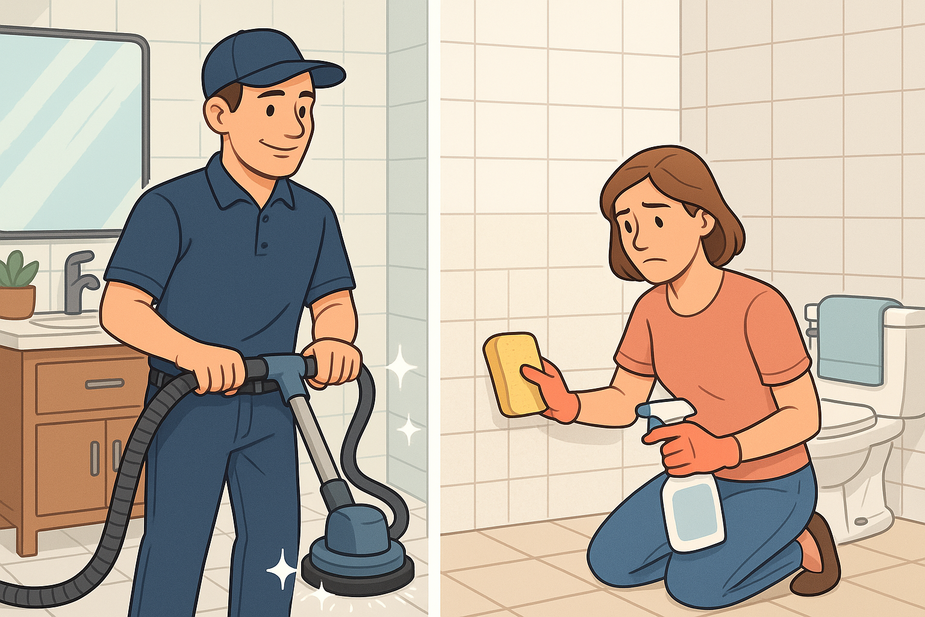
Picture this: it’s Saturday afternoon, and instead of hiking a trail or relaxing with your family, you’re on your hands and knees in the kitchen, scrubbing grout lines with a stiff brush and a cleaner that smells like a chemical factory. Thirty minutes pass. Then an hour. You stand up, stretch your aching knees, and look at the floor. The grout is maybe slightly lighter in a few spots. Mostly, it looks the same. This is a frustration that thousands of homeowners in Arvada, Lakewood, Westminster, and Denver proper know firsthand — and it does not mean you did anything wrong.
The truth is, grout is one of the most stubbornly difficult surfaces in any home to clean, and there are real scientific reasons for that. This guide is here to give you an honest, no-fluff answer to the question that brought you here: whether professional grout cleaning in Denver is worth the investment, or whether a determined DIY effort is genuinely all you need. We will walk through what each approach actually involves, what it realistically costs in time and money, and what kind of results you can expect from each — so you can make a confident, informed decision for your home.
Why Grout Gets So Dirty — And Why It’s Not Your Fault
Before comparing approaches, it helps to understand why grout becomes so discolored in the first place — because once you understand the material, the limitations of scrubbing it with a toothbrush make complete sense.
Most homes in the Denver Metro Area use Portland-cement-based grout, the most common type found in residential tile installations. This material has microscopic pores throughout its structure. That is not a defect or a sign of poor installation — it is simply how the material is made. Think of each grout line as a tiny strip of absorbent material running between your tiles. Every spill, every footstep, and every cleaning session pushes something new into those pores: dirt, grease, bacteria, soap scum, cleaning product residue, and moisture. Over time, all of that accumulates inside the grout at a level that surface scrubbing simply cannot reach.
Sanded grout — the type commonly used in wider floor tile joints — has even more surface texture and porosity than unsanded varieties used in tighter wall tile joints. This means floor grout is especially prone to trapping soil, which is why kitchen and bathroom floors so often look the dirtiest even in otherwise well-kept homes.
Colorado adds its own set of challenges that make grout maintenance harder than in many other parts of the country. From November through March, homes across Arvada, Westminster, and the broader Denver Metro Area deal with snow, slush, ice-melt products, and road gravel tracked directly onto tile floors at entryways, mudrooms, and kitchens. Ice-melt salts are both abrasive and hygroscopic, meaning they attract and hold moisture in grout, accelerating the buildup of embedded grime through the entire winter season.
Denver’s semi-arid summers bring a different problem. The dry, dusty climate generates significant fine-particulate matter that settles onto tile floors and gets walked into porous grout continuously throughout the warmer months. Then there is Denver’s water. The water supply across many Denver Metro Area neighborhoods is classified as moderately to hard, carrying elevated levels of calcium and magnesium. Over time, these minerals deposit on tile surfaces and inside grout lines, creating a whitish-gray film that looks like staining even when the grout is otherwise clean. This mineral buildup does not respond to standard scrubbing — it requires professional treatment with appropriate chemistry to fully dissolve and rinse away.
In kitchens, cooking oils and food particles migrate into grout lines near stovetops and prep areas with every meal. In bathrooms, soap scum, body oils, and constant moisture create ideal conditions for mildew to develop inside grout pores. The EPA emphasizes that controlling moisture and addressing mold in porous building materials is important for protecting indoor air quality. Grout in wet areas is a textbook example of a surface where mold and mildew can establish themselves below the visible layer — meaning grout that looks surface-clean can still harbor biological growth.
For households with children or pets — which describes a large portion of the homeowners we work with — spills, accidents, and tracked-in debris happen constantly, compounding the problem faster than in low-traffic homes.
The takeaway here is an important one: discolored grout is a normal, predictable outcome given the material’s properties and the everyday demands of life in a Colorado home. It is not a reflection of how clean or careful you are as a homeowner.
What DIY Tile Cleaning Actually Involves
To give you an honest comparison, it is important to describe what DIY tile cleaning actually looks like in practice — including what it does well and where it falls structurally short.
A typical DIY grout cleaning session follows a familiar sequence. You start by sweeping or vacuuming the floor to remove loose debris. Then you apply a store-bought tile and grout cleaner, a baking soda paste, or a homemade solution to sections of the floor. You scrub grout lines manually with a nylon brush, an old toothbrush, or a scrub pad — usually on your hands and knees. You wipe or rinse away the residue and repeat on stubborn sections. Some homeowners also bring in a consumer-grade steam mop with a tile attachment for an added step.
Common tools and products for DIY tile cleaning include nylon scrub brushes and old toothbrushes, microfiber mops and pads, store-bought tile and grout sprays (many of which contain bleach, surfactants, or acid-based formulas), homemade solutions like baking soda paste or white vinegar mixtures, and consumer steam mops that typically run between $80 and $200 or more if purchased specifically for this purpose.
It is important to be honest about what DIY does well, because a good comparison has to be fair in both directions. For routine weekly or monthly maintenance — a quick damp mop, sweeping, and promptly wiping up spills before they penetrate — DIY is entirely appropriate and is exactly what homeowners should be doing between professional cleanings. For relatively new tile with well-sealed, lightly soiled grout, a consistent DIY maintenance routine works well.
However, there are two specific product warnings that every homeowner should know before reaching for common DIY solutions.
The first is about white vinegar. It is one of the most commonly recommended homemade grout cleaners, but vinegar is acidic. Repeated use of acidic cleaners on cement-based grout can slowly etch and degrade the grout material itself, weaken or strip existing sealant, and dull certain tile surfaces — particularly natural stone like marble, travertine, or slate. Many Denver-area homeowners with natural stone or unsealed grout do not realize this risk until the damage is already done. This is not a scare tactic — it is a practical caution that professional tile cleaners emphasize because they see the results regularly.
The second is about bleach. Bleach-based cleaners may visually lighten surface staining, but they cannot extract deeply embedded soil from inside grout pores. Overuse can also alter grout color — especially on colored or charcoal grout — and degrade sealing over time. There is also a critical safety point worth knowing: never mix bleach-based products with acidic cleaners like vinegar. The chemical reaction produces toxic chlorine gas. These two popular DIY cleaning agents should never be used together in the same cleaning session.
The core structural limitation of DIY tile cleaning, however, goes beyond product choice. No consumer product or tool — including steam mops — can generate the sustained high temperature, controlled pressure, and simultaneous vacuum extraction that professional equipment delivers. DIY cleaning primarily works on the surface of the grout and the top layer of soil. The deeply embedded contamination — years of absorbed grease, bacteria, mineral deposits, and mold in wet areas — remains inside the grout’s pores after a DIY session. This is why grout looks somewhat better immediately after scrubbing but returns to a dingy appearance quickly, especially in high-traffic areas. You are cleaning what you can see and reach. Professional equipment reaches what you cannot.
The Real Cost of DIY Tile Cleaning: Time, Money, and Results
Understanding the true tile cleaning cost vs. time investment requires looking at three pillars honestly: the time you spend, the money you spend, and the results you actually get.
The Time Cost
Scrubbing a standard kitchen or bathroom floor — typically 100 to 250 square feet — by hand takes a motivated homeowner anywhere from two to five or more hours, especially when grout lines are narrow, heavily soiled, or require multiple product applications. A home with tile throughout the main level, or multiple bathrooms, can stretch this work across an entire weekend.
Professional teams can typically complete a standard Denver home tile and grout cleaning job in two to four hours — and the homeowner does not perform any of the physical labor. The gap in time efficiency is significant, especially for busy Denver Metro families, landlords managing multiple units, or Airbnb hosts working within a tight turnover window. In Colorado, weekends are genuinely valuable. Time spent on your knees scrubbing tile is time not spent outdoors, with your family, or on anything else you value.
The Money Cost
A single DIY session accumulates more costs than most homeowners initially expect. Commercial tile and grout cleaners typically run $10 to $25 per bottle. Scrub brushes and pads cost $10 to $30. A consumer steam mop purchased specifically for grout cleaning can run $80 to $200 or more. Add knee pads, microfiber cloths, and a bucket, and you are looking at an additional $20 to $40. A well-equipped first session might cost $120 to $295 before you account for your time.
The honest point is this: a single DIY session costs less upfront than hiring a professional. But because DIY results are often unsatisfying — particularly on older, heavily soiled grout — many homeowners repeat the process multiple times per year, accumulate products, and eventually purchase upgraded tools in an attempt to get better results. Those cumulative costs erode the initial savings considerably.
Professional tile and grout cleaning in Denver typically costs in the range of $190 to $250 per project for a standard residential job, according to pricing data from Angi’s Denver cost guides. When you factor in that professional cleaning delivers dramatically better results, includes professional-grade sealing, and lasts significantly longer than a DIY session, the investment looks quite different on a per-outcome basis. And when your time is counted as a real resource — which it is — the calculus shifts further.
The Results Gap
When evaluating pro vs. DIY grout outcomes, it is important to be direct but fair. DIY cleaning typically delivers partial improvement — restoring some brightness to grout but leaving deep-set discoloration, wear lanes in high-traffic areas, and embedded contamination visible. The grout looks better, but not restored.
Professional cleaning delivers a dramatic and uniform restoration of grout appearance, pulling contamination from inside the pores rather than just off the surface. The difference is visible immediately and striking in before-and-after terms. Without professional-grade sealing applied after cleaning, grout in high-traffic areas re-soils within weeks to a few months regardless of the cleaning method used — which means the cycle of effort and disappointing results repeats quickly for the DIY approach.
What Professional Grout Cleaning in Denver Actually Involves
Professional grout cleaning is not the same process as DIY cleaning with better products. It is a fundamentally different approach using equipment, chemistry, and trained assessment that cannot be replicated with consumer tools, regardless of how motivated or thorough you are.
The process begins with a professional inspection and assessment. Before any cleaning starts, a trained technician evaluates the tile type — ceramic, porcelain, or natural stone such as travertine or slate — the grout type, and the specific condition of the surfaces. This matters because different tile materials and grout formulations require different cleaning approaches. What works safely on ceramic tile can permanently damage unsealed natural stone. This trained assessment is something DIY simply cannot replicate without industry experience.
From there, targeted pre-treatment solutions are applied to break down grease, oils, soap scum, and mineral deposits before any mechanical cleaning begins. In Denver Metro homes, where hard water mineral deposits are a persistent issue, specialized descaling chemistry is used to dissolve the calcium and magnesium buildup that scrubbing alone cannot remove.
The core of the professional process is the equipment itself. Professional cleaning uses truck-mounted or high-performance portable systems that deliver high-temperature water combined with controlled pressure and powerful vacuum extraction simultaneously. Hot water and cleaning solution are injected into the grout pores at temperatures and pressure levels far beyond what any consumer steam mop can achieve. This loosens deeply embedded soil, bacteria, grease, and biological growth from inside the pores. The vacuum extraction system then immediately pulls all of that contaminated solution out of the grout — rather than letting it settle back onto the surface the way mop-and-bucket rinsing does. This extraction capability is the fundamental reason professional results look so dramatically different from DIY outcomes.
The combination of high heat and professional-grade cleaning agents also significantly reduces bacteria, mold, and mildew that have established themselves inside grout pores in bathrooms, showers, and around kitchen sinks. The EPA advises that mold in porous materials should be addressed promptly to protect indoor air quality and that moisture control is the key to preventing mold recurrence. Professional cleaning directly supports this goal in a way surface scrubbing cannot.
After cleaning, a penetrating grout sealer is applied to the now-clean grout lines. This sealer soaks into the pores and creates a barrier that repels future soil, moisture, and staining — dramatically slowing re-soiling and making your routine DIY maintenance far more effective going forward. Industry data indicates that grout sealing can protect against mildew and staining for up to two years depending on traffic levels and how well the grout is maintained between cleanings. Without sealing, even professionally cleaned grout will re-soil relatively quickly. Sealing is a standard part of the professional process, not an optional luxury.
For Denver Metro homeowners specifically, Colorado’s hard water creates mineral deposit challenges that require professional descaling chemistry and technique. If you have noticed a whitish film on your tile or grout lines that does not respond to scrubbing, you are almost certainly looking at hard water mineral deposits — and professional cleaning is the only reliable way to address them fully.
At Carpet Couch Cleaning LLC, our approach to professional grout cleaning in the Denver Metro Area combines professional-grade equipment, eco-friendly and pet-safe cleaning solutions, and a thorough understanding of Colorado homes. From the hard water conditions common in Arvada and Westminster to the seasonal grime that accumulates in mudrooms and entryways throughout our winters, every job starts with a genuine assessment of your specific tile and grout type — because the right approach matters just as much as the equipment behind it.
DIY vs. Professional Grout Cleaning — Side-by-Side Comparison
The best way to see the full picture of pro vs. DIY grout cleaning is to lay the two approaches side by side across every factor that matters to a homeowner. This comparison is meant to be honest — DIY has real value in the right context, but the gap in outcomes for deep cleaning is significant and worth understanding clearly.
| Factor | DIY Tile Cleaning | Professional Grout Cleaning Denver |
|---|---|---|
| Time Required | 2–5+ hours of physical labor per room | 2–4 hours total (professionals handle everything) |
| Equipment | Consumer brushes, mops, basic steam mop | Industrial-grade systems with high heat, pressure, and vacuum extraction |
| Depth of Clean | Surface-level; limited penetration of grout pores | Deep extraction from inside grout pores |
| Results | Partial improvement; grout often still mottled or dingy | Dramatically restored, uniform appearance |
| Grout Sealing | Rarely included; homeowners often skip this step | Included or available as add-on; protects for up to two years |
| Longevity of Results | Short-term; high-traffic areas re-soil within weeks | Long-lasting, especially with proper routine maintenance |
| Risk of Damage | Moderate — acid, bleach, or abrasives used incorrectly can etch tile or strip sealer | Low — trained technicians assess surfaces and use appropriate methods |
| Typical Cost | Lower upfront; costs accumulate over repeated attempts | $190–$250 per project in Denver (Angi data) |
When tile cleaning cost vs. time is evaluated honestly — counting your hours as a real resource and factoring in repeated attempts and accumulated product costs — the investment in professional cleaning often delivers better value per outcome, not just better-looking results.
When to DIY and When to Call a Professional — Practical Guidance for Denver Homeowners
DIY Tile Cleaning Makes Sense When…
- Grout is relatively new (installed within the past two to three years), in good condition, and shows no deep staining or discoloration
- The tile area is small and lightly used — a powder room, a single bathroom used by adults only, or a compact entryway
- You are doing routine weekly or monthly maintenance: sweeping, damp mopping with a neutral pH cleaner, and promptly cleaning up spills before they penetrate
- You have recently had a professional cleaning completed and are maintaining results between appointments
It’s Time to Call a Professional When…
- Grout lines are visibly darker than the grout visible under baseboards or unmoved furniture — this is the clearest sign of deep, embedded soiling that DIY cannot reach
- There is visible mold spotting, a persistent musty odor, or mildew growth in shower grout, around toilets, or near sinks — the EPA advises that mold in porous materials should be addressed promptly to protect indoor air quality
- You have already attempted DIY cleaning multiple times and are not satisfied with the results
- You are preparing a Denver area home for sale, an appraisal, or a buyer walkthrough — clean grout makes an immediate visual impression that matters in a competitive market
- You are a landlord or property manager handling a move-in or move-out in the Denver Metro Area, where clean tile directly affects security deposit decisions and listing photos
- You are an Airbnb or short-term rental host in Arvada, Lakewood, or Westminster, where guest impressions and online reviews depend on the visual quality of every room
- Grout has not had a professional grout cleaning in Denver performed in one to two or more years
- High-traffic areas like kitchens, entryways, mudrooms, or family bathrooms show visible wear lanes and heavy buildup that manual scrubbing has failed to restore
The Carpet Couch Cleaning LLC Approach to Tile and Grout Cleaning in the Denver Metro Area
Carpet Couch Cleaning LLC was built around one core belief: a clean home is a healthy home. That philosophy drives every tile and grout cleaning job the company performs across Arvada and the Denver Metro Area — from the products chosen to the equipment used to the way every job is communicated and priced.
One of the most important parts of that philosophy is the commitment to eco-friendly, pet-safe, and family-safe cleaning solutions on every tile and grout job. For Denver Metro households with children, pets, or anyone with chemical sensitivities, this matters enormously. The products used at Carpet Couch Cleaning LLC are effective against the deep contamination inside grout pores without leaving harsh chemical residues in your home. This is not a compromise between results and safety — professional-grade eco-conscious chemistry, combined with the heat and extraction power of commercial equipment, delivers cleaning that is both thorough and genuinely safe for the people and animals who live in your home.
On the equipment side, Carpet Couch Cleaning LLC uses modern, professional-grade systems — truck-mounted or high-performance portable units — that deliver the high-temperature cleaning, controlled pressure, and powerful vacuum extraction that no consumer tool can match. This is the equipment that makes real restoration possible, not just surface-level improvement.
Having served homeowners across Arvada, Denver, Lakewood, Westminster, and surrounding communities for years, the team at Carpet Couch Cleaning LLC understands the specific challenges Colorado homes face. Hard water mineral deposits that accumulate in grout, seasonal soil from winter tracking and summer dust, and the particular demands of high-traffic family homes and rental properties — these are factors the team encounters on every job and accounts for in every cleaning plan. That local knowledge informs how each job is assessed and approached from start to finish.
Carpet Couch Cleaning LLC also operates with honest, upfront pricing and no-pressure estimates. The goal is never to upsell — it is to give every customer a genuinely clean result and a clear understanding of what was done and why. That straightforward approach is central to the trust the company has built across the Denver Metro Area.
Clean grout is also about more than how your floors look. Tile that has been professionally cleaned and properly sealed means less embedded moisture and bacteria in your bathroom and kitchen surfaces, fresher-smelling rooms, and a home environment that genuinely supports the health and comfort of your family. That is the ‘clean home, healthy life’ promise — and it is what every tile and grout job at Carpet Couch Cleaning LLC is designed to deliver.
Both DIY tile cleaning and professional grout cleaning have a real role in a well-maintained Denver home. DIY is valuable for routine upkeep, light maintenance, and preserving results between professional appointments. But for genuine restoration of deeply discolored grout, long-term staining, mold concerns, or any high-stakes situation like a home sale, rental turnover, or move-out inspection, professional grout cleaning in Denver delivers a level of result — and an efficiency of time — that DIY simply cannot match. Cleaner grout means less embedded moisture and bacteria, fresher-smelling bathrooms and kitchens, and tile floors that actually look the way they were meant to look.
If your grout is overdue for a real deep clean, the team at Carpet Couch Cleaning LLC would love to show you what is possible. Reach out to Carpet Couch Cleaning LLC for an honest, no-obligation quote and give your tile floors the restoration they deserve. We serve Arvada, Denver, Lakewood, Westminster, and homeowners throughout the greater Denver Metro Area — and we are ready to help you get your home looking and feeling its best.