How Often Should You Clean Upholstery? Professional Cleaning Schedule for Denver Homes
Most upholstered furniture should be professionally cleaned every 12–18 months. Homes with pets, kids, smokers, or heavy daily use often need cleaning every 6–12 months, while lightly used furniture in pet-free, smoke-free homes can sometimes stretch to 18–24 months. Regular vacuuming between cleanings helps maintain results.
This guide breaks down that professional schedule in plain terms and covers exactly what pushes it faster or slower for your household. Carpet Couch Cleaning LLC works in homes and rentals across the Denver metro every week, and upholstery cleaning frequency is one of the questions we get asked the most — especially from folks dealing with pets, kids, and Colorado’s dry, dusty climate.
How Often Should You Clean Upholstery? The Professional Recommendation
The standard answer is every 12 to 18 months for typical household use. That’s the range we recommend to most Denver-area homeowners, and it lines up with the IICRC’s professional maintenance guidance, which puts the outer window at 12 to 24 months depending on use and household factors.
Here’s why vacuuming alone doesn’t cut it. Your vacuum picks up loose surface debris — crumbs, pet hair, dust you can see. It doesn’t extract what’s buried down in the fibers and cushion padding: skin cells, body oils, dust mite waste, and fine soil that works its way deeper every time someone sits down. That stuff builds up whether you notice it or not, and it’s what causes fabric to look dull and feel less fresh over time.
This 12–18 month guideline applies to the fabrics we clean regularly: polyester, nylon, and cotton or cotton-blend upholstery. Sofas, couches, armchairs, dining chairs, headboards — all fall into that category.
One honest caveat: Carpet Couch Cleaning LLC does not clean silk or wool upholstery. Those fibers are delicate, react differently to water and cleaning agents, and need a specialist evaluation that falls outside our standard service scope. If you’ve got a silk accent chair or a wool-upholstered antique, get an expert who specializes in those materials specifically.
Denver’s climate adds its own wrinkle here. With 300-plus sunny days a year and frequent wind, outdoor dust and pollen stay airborne longer and settle into indoor fabrics more readily than in wetter, calmer climates. That makes consistent vacuuming and a periodic professional deep clean genuinely more useful for Front Range households than for homes in, say, the Pacific Northwest.
What Determines Your Upholstery Cleaning Schedule?
There’s no single right answer for every household — it depends on how the furniture is used, who’s using it, and what’s going on in your home. The 12–18 month window is a starting point, not a rule that fits everyone.
Some households need to shorten that interval considerably. Others can stretch it out. Here’s the practical breakdown.
Reasons to Clean More Often (Every 6–12 Months)
- Pets. Dander, shedding fur, and the occasional accident add soil and odor faster than a vacuum can keep up with. Homes with dogs or cats typically need professional cleaning every 6–12 months.
- Kids and daily-use furniture. Spills, snacks, and constant contact accelerate soil buildup on the pieces your family actually lives on.
- Allergy or asthma sufferers. Upholstery holds dust mite debris, pollen, and dander in its fibers. More frequent cleaning reduces that reservoir and can noticeably help symptoms indoors.
- Smokers or homes with prior smoke exposure — tobacco or marijuana. Smoke residue penetrates deep into fibers and padding, not just the surface. Source treatment combined with more frequent cleaning helps manage lingering odor.
- Short-term rentals, Airbnbs, or guest-heavy homes. Higher turnover and heavier use support a 6–9 month interval as a practical, common-sense recommendation rather than the standard 12–18 months.
- Pet urine accidents. Treat this as source contamination, not just a visible stain. It needs prompt professional attention and often a follow-up clean sooner than your normal cycle would call for.
When You Can Extend the Schedule (18–24 Months)
Some households genuinely can go longer between professional cleanings, and it’s worth knowing when that applies to you:
- Light-use furniture — guest room chairs, formal seating that rarely gets sat on.
- No pets, no kids, non-smoker households naturally accumulate soil and odor much more slowly.
- Consistent DIY maintenance — weekly vacuuming and prompt spot-cleaning — genuinely extends the time between deep cleans.
- Lower-traffic placement, like dining chairs used mainly at mealtimes versus a living room sofa that gets daily use.
Think of the 18–24 month extension as tied specifically to light use, not as a universal recommendation. If you’re not sure which category you fall into, err toward the shorter end of the range.
What Happens During a Professional Upholstery Cleaning?
Here’s what our process typically involves at Carpet Couch Cleaning LLC — described as our own procedure, not a universal industry standard, since methods do vary between companies.
- Step 1 — Pre-spray treatment. We apply a professional-grade, eco-friendly and pet-safe pre-treatment to loosen embedded soil and oils before extraction begins. This step matters because it breaks down grime that’s bonded to the fibers, making the actual cleaning far more effective.
- Step 2 — Main alkaline clean. This is the deep extraction phase. It lifts dirt, allergens, and residue from within the fibers and cushion padding — going well beyond what home vacuuming or spot-cleaning can reach.
- Step 3 — Chemical neutralization. A neutralizing rinse balances the fabric’s pH after cleaning. This helps prevent sticky residue, discoloration, or fabric that re-soils faster than it should — a common problem when cleaning products aren’t properly rinsed out.
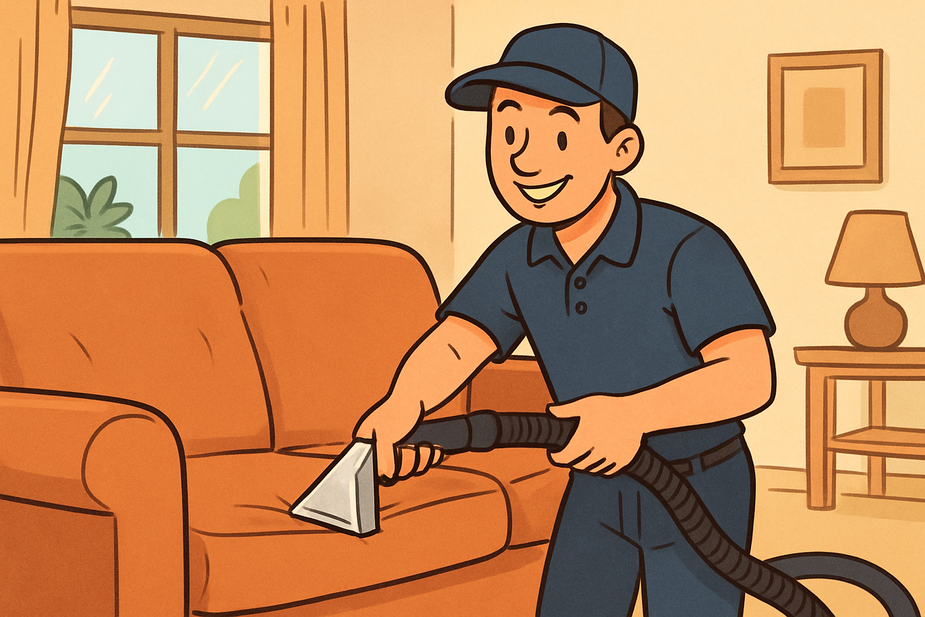
On equipment: for standard residential upholstery jobs, we generally use truck-mounted hot-water extraction, which delivers stronger suction and hotter water than portable units. For apartments, condos, and high-rise units where our truck hoses can’t reach, we bring in portable units instead. Same three-stage process either way — just different delivery equipment depending on the job site.
As for drying, it varies by fabric type, humidity, airflow, and how much moisture is used during extraction. With good ventilation, most upholstery dries within a similar timeframe to carpet — roughly 20 to 30 minutes — though heavier fabrics or rooms with poor airflow can take longer. Treat that as a general estimate rather than a guarantee, since every piece and every room is a little different.
For persistent pet, smoke, or musty odors, industrial ozone treatment may be used as a specialized, professional-only treatment. It’s applied to unoccupied spaces and isn’t something we’d recommend as a general home remedy — it requires the right equipment and know-how to use safely and effectively.
If you’re dealing with a sofa that’s overdue and starting to show it, our upholstery cleaning service covers exactly this kind of deep clean for sofas, couches, and chairs across the Denver metro.
Special Situations That Call for Faster Action
Some circumstances mean you shouldn’t wait for your normal 12–18 month cycle at all:
- Pet urine accidents need immediate source treatment and stain/odor removal. Waiting lets the contamination set deeper and makes odor removal harder later.
- Smoke odor, tobacco or marijuana, may require industrial ozone treatment plus neutralization. Homes with ongoing exposure often benefit from 12-month or shorter intervals rather than stretching toward 18.
- Musty smells or past water damage usually signal trapped moisture or microbial growth, not just surface dirt. That’s a different problem than routine soiling and should be addressed promptly.
- Visible stains or a noticeable color change should be cleaned before the soil sets permanently or damages the fiber’s appearance long-term.
- Mattresses are a related but separate concern. They collect dust mites, skin cells, and dust over time, and we generally recommend cleaning them roughly every 12 months — especially in allergy-sensitive households.
- Commercial upholstery — office waiting rooms, rental property furniture — sees much higher foot traffic and turnover, which generally calls for 6–12 month intervals rather than the residential standard.
How to Maintain Upholstery Between Professional Cleanings
Good maintenance habits stretch the time between deep cleans and keep furniture looking better longer:
- Vacuum weekly on high-use pieces — sofas, favorite armchairs — using an upholstery attachment. This reduces surface soil and starves dust mites of the debris they feed on.
- Blot spills immediately with a clean, dry cloth. Never rub — rubbing pushes the stain deeper into the fibers instead of lifting it out.
- Avoid over-wetting and harsh chemicals. Ammonia and vinegar in particular, especially around pet accidents, can actually worsen marking behavior by leaving an odor that attracts pets back to the same spot.
- Improve airflow while drying. Open windows or run a fan. Denver’s naturally dry climate is an advantage here, but active ventilation still speeds things up noticeably.
- Consider a fabric protectant treatment matched to your furniture’s specific care code. Done right, it helps resist future staining between professional cleanings.
- Rotate and flip cushions periodically to distribute wear and soil evenly across the piece instead of concentrating it in one spot.
Why Staying on Schedule Pays Off
Regular cleaning protects fiber appearance and slows the abrasive wear that dulls fabric over time — dirt particles ground into fibers act almost like sandpaper with repeated use.
Some furniture warranties and manufacturer care guides call for regular maintenance using approved cleaning methods, though this varies by product, so it’s worth checking your specific furniture’s documentation.
Well-maintained upholstery also preserves resale and rental value, which matters in Denver’s active rental and short-term rental market where furnished units turn over frequently.
Staying on schedule reduces the allergen and dust-mite reservoirs sitting in your furniture — a meaningful benefit in a high-pollen, high-dust environment like the Front Range. And practically speaking, treating spots and odors early is far less costly than dealing with a permanent stain or replacing furniture entirely down the line.
Denver-Metro Considerations for Upholstery Care
Local climate genuinely affects how often you need to clean, and it’s worth understanding why:
- Dry climate and wind. Colorado’s low humidity and frequent wind keep dust and pollen airborne longer, which means more of it ends up settling into your indoor fabrics compared to calmer, wetter climates.
- Seasonal pollen. Denver has meaningful pollen seasons, particularly in spring and late summer. That pollen works its way into upholstered furniture near open windows and entryways more than people expect.
- Air quality variability. The Front Range periodically sees elevated ozone and particulate levels, which reinforces the value of routine indoor dust control — upholstery included, not just floors.
- Winter road salt and grime. Tracked-in salt and moisture during Denver winters add extra soil load to upholstery near entryways, especially mudroom-adjacent seating where people sit down right after coming inside.
We serve Arvada, Westminster, Aurora, Littleton, Highlands Ranch, Broomfield, Lakewood, Centennial, and greater Denver — houses and apartment or condo units alike, with portable equipment ready for buildings our trucks can’t reach.
Signs You Should Book a Cleaning Now
If any of these apply, don’t wait for the calendar to hit 18 months:
- Visible stains or discoloration that doesn’t respond to safe spot-cleaning
- Musty, pet, or smoke odors that linger even after airing out the room
- Known or suspected pet urine accidents
- It’s been 18-plus months since the last professional cleaning
- Allergy or asthma symptoms that seem to worsen indoors
- A recent spill that’s already started to set into the fabric
- Upcoming guests, showings, or events where appearance and odor matter
- General dullness or fading not explained by sun exposure alone
Frequently Asked Questions
Can I clean my upholstery more often than every 12–18 months?
Yes. More frequent cleaning is generally fine for nylon, polyester, and cotton upholstery as long as the method matches the fabric’s care code and avoids over-wetting. Routine vacuuming plus periodic professional cleaning is a safe combination for most households.
What’s the difference between professional upholstery cleaning and spot-cleaning?
Spot-cleaning treats a single visible stain or spill on the surface. Professional cleaning addresses embedded soil, allergens, and odor sources throughout the entire piece, including the deep fibers and cushion padding that spot-cleaning simply can’t reach.
How long does professional upholstery cleaning take to dry?
It depends on the fabric, humidity, airflow, and how much moisture is used during extraction. With good ventilation, many pieces dry in a similar window to carpet, often within about 20 to 30 minutes, though heavier fabrics or poorly ventilated rooms can take longer.
Does Carpet Couch Cleaning LLC clean silk or wool upholstery?
No. Silk and wool are delicate fibers that require specialist evaluation outside our standard service scope. We clean polyester, nylon, and cotton or cotton-blend upholstery, which covers the vast majority of sofas, couches, and chairs in Denver-area homes.
How often should upholstery be cleaned in a home with pets?
Homes with dogs or cats typically need professional upholstery cleaning every 6 to 12 months rather than the standard 12 to 18 months. Dander, shedding, and occasional accidents add soil and odor faster than regular vacuuming alone can manage.