How to Get Coffee Stains Out of Carpet: DIY Methods vs. Professional Help
To get coffee stains out of carpet, act fast: blot (don’t rub) with a clean cloth, flush with cold water, then treat with a 1:1 white vinegar-and-water solution or mild dish soap, blotting from the outside in. Fresh spills usually respond to DIY. Old, set-in, or large stains typically need professional hot-water extraction for full removal.
Coffee is probably the single most common stain we get called about in Denver-metro homes. Between the coffee shops on every corner and the number of households running on a pot a day, spilled coffee on carpet is just a fact of life around here. This post walks through what actually works on a fresh spill, what to do once a stain has dried in, and how to tell when it’s time to stop scrubbing and call someone. Carpet Couch Cleaning LLC handles this exact problem for homeowners across Arvada and the greater Denver metro, so we’ve seen what works and what doesn’t.
Why Are Coffee Stains So Hard to Remove?
Coffee stains are stubborn because coffee is loaded with tannins — the same plant compounds found in tea and red wine that chemically bond to carpet fibers rather than just sitting on top of them. That bond is what turns a simple spill into a real stain instead of something you can just wipe away.
If you take your coffee with milk or cream, you’ve got a second problem layered on top. The dairy adds a protein component to the stain, and protein-based residue behaves differently than straight tannin residue, which is part of why old coffee-with-cream spills sometimes leave a faint odor along with the discoloration.
Here’s a mistake we see constantly: people reach for hot water to ‘help dissolve’ a fresh coffee stain. Don’t do it. Heat accelerates the chemical bonding process between tannins and carpet fiber, essentially cooking the stain into the pile. Always start with cold water on a fresh spill — never hot.
Denver’s climate throws in its own twist. With 300-plus sunny days a year and low humidity, spilled coffee evaporates fast. That sounds like a good thing, but it actually concentrates the coffee solids and sugars right on the surface of the fiber as the liquid dries off, which often makes the stain look darker and more visible here than it would in a humid climate back east.
Timing matters more than almost anything else. A stain treated within the first 24 hours has a dramatically higher chance of coming out completely with basic DIY methods. Once it’s dried and set for days or weeks, you’re dealing with a different problem entirely.
How to Remove a Fresh Coffee Stain From Carpet (First 24 Hours)
Fresh coffee stains respond well to a simple blot-dilute-treat sequence, done immediately and without rubbing. Here’s exactly how to do it right.
Step 1 — Blot, Don’t Rub
Rubbing is the number one thing that turns a manageable spill into a permanent stain. When you rub, you spread the coffee outward into fibers that weren’t even affected yet, and you drive it deeper down into the carpet backing where it’s much harder to reach.
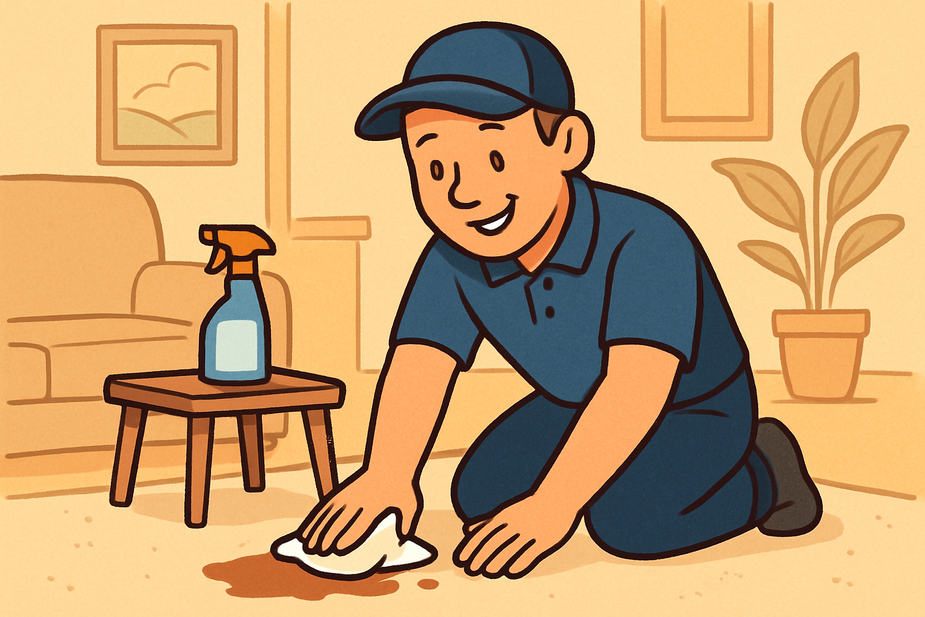
Instead, press a clean white cloth or a folded paper towel straight down onto the stain. Lift it up, rotate to a clean section of the cloth, and press down again. Keep repeating with fresh sections of cloth so you’re not just smearing coffee back into the carpet.
Work from the outer edge of the stain inward toward the center. This keeps the stain from expanding outward as you work.
Step 2 — Cold Water Dilution
Lightly mist or dab cold water onto the stain — do not pour water on it or soak the area. You’re trying to dilute the coffee that’s still sitting in the fibers, not flood the carpet pad underneath.
Blot immediately after every application of water. Don’t let it sit.
Repeat this dilute-and-blot cycle several times. You’ll notice the brown color transferring onto your cloth gets lighter each round — keep going until that transfer fades significantly.
Step 3 — Household Solutions That Work
Once you’ve diluted and blotted out as much loose coffee as possible, move to an actual cleaning solution.
- White vinegar solution: Mix a 1:1 ratio of white vinegar and cold water in a spray bottle. Mist it onto the stain, let it sit for 5-10 minutes, then blot from the outside in. Rinse with plain cold water afterward and blot dry.
- Dish soap solution: Add a few drops of clear, undyed dish soap to one cup of cold water. Apply with a cloth, let it dwell for 3-5 minutes, then blot.
- Baking soda paste: Mix baking soda with a small amount of cold water to form a paste, spread it over the stain, and leave it for about 15 minutes. Vacuum or gently scrape off the residue afterward — this is important, because leftover baking soda that isn’t fully removed can actually attract new soil and dirt over time.
- Club soda: This one’s optional. The carbonation can help lift some coffee color, but in our experience it’s less consistently effective than vinegar or dish soap specifically for coffee stains. Use it as a backup, not your first move.
Drying the Spot (Denver’s Dry Climate Advantage)
Once you’re done treating the spot, open a window or point a fan directly at the area. Denver’s low humidity is actually working in your favor here — a properly ventilated, lightly-moistened spot often surface-dries in under an hour.
Just don’t oversaturate the carpet while you’re treating it. Too much liquid can soak into the pad underneath, which not only prolongs drying time but can lead to other problems down the road if moisture sits in the backing.
When Fresh-Stain DIY Isn’t Working
If you’ve gone through two or three full cycles of dilution, blotting, and vinegar or dish soap treatment and there’s still visible brown discoloration, you’ve hit the ceiling of what fresh-stain DIY can do. At that point, treat it like an old, set-in stain — or consider calling a professional.
How to Remove Old or Set-In Coffee Stains From Carpet
Old coffee stains are harder to remove because the tannins, sugars, and milk proteins have had time to fully penetrate and bond to the carpet fiber. Surface blotting alone won’t touch a stain that’s had days or weeks to set.
The first move on any old stain is to rehydrate it. Dampen the area with cold water and let it sit for a few minutes before applying any treatment — this softens up the dried residue so your cleaning solution actually has something to work with.
Enzyme-Based Carpet Cleaners
Enzyme cleaners contain biological catalysts that break down organic residues — specifically the milk proteins and sugars that coffee leaves behind, which regular soap doesn’t always fully address. Many enzyme spotters sold at hardware stores are labeled safe for nylon and polyester, which happen to be two of the fiber types we clean most often in Denver-area homes. Always spot-test in a hidden area first before treating the visible stain.
Typical use: apply the enzyme cleaner, let it dwell for 5-15 minutes, blot, rinse lightly with cold water, and repeat if needed.
Hydrogen Peroxide Method
Standard 3% hydrogen peroxide from the drugstore can work on stubborn set-in stains. But test it in a hidden spot first — like a closet corner or under a piece of furniture — because peroxide is an oxidizer and can lighten some carpet dyes.
Apply it lightly, keep the dwell time short (just a few minutes), then blot and rinse with water.
One important note: never use hydrogen peroxide, or really any aggressive spot treatment, on wool or silk. Those fibers react unpredictably to oxidizers and can bleed color or fray. This is actually one of the reasons Carpet Couch Cleaning doesn’t service wool or silk carpets and rugs — even a mild treatment carries real risk on those materials.
Repeated Vinegar Treatments
For a stubborn stain that won’t fully lift, dampen it again with the same 1:1 vinegar-and-water solution, let it sit for 10-15 minutes, blot, and rinse. Let the carpet dry fully between attempts rather than hammering it with repeated treatments in one session. Spread this out over 2-3 days instead of trying to force it out in one aggressive sitting — you’ll get better results and do less wear on the fiber.
Oxygen-Based Bleach Alternatives
Oxygen bleach — made from sodium percarbonate or sodium bicarbonate — is a gentler alternative to chlorine bleach and can help lighten set-in stains on light-colored synthetic carpet. It works more slowly than chlorine bleach but without the same risk to the carpet.
One hard rule: never use chlorine bleach on carpet, period. It strips out the dye and permanently weakens the fibers. Even with oxygen bleach, test it in a hidden spot first and follow the label instructions exactly.
When DIY Becomes Not Worth It
If you’ve run through multiple treatments over several days and there’s still a visible brown or yellow spot — or worse, a ‘ring’ starts appearing where deeper stained material wicks back up to the surface as it dries — DIY has hit diminishing returns.
Be honest with yourself here. For busy Denver households, the cumulative time and product cost of repeated DIY attempts often ends up costing more than one focused professional visit would have.
When Should You Call a Professional for Coffee Stain Removal?
Call a professional when DIY methods have stalled, when the stain is old or large, or when you’re dealing with odor alongside the discoloration. Here’s what actually happens during a professional cleaning visit.
The 3-Stage Professional Cleaning Process
Our process for coffee stains — and really any organic stain — follows three stages:
- Pre-spray treatment: We apply a targeted tannin pre-conditioner directly to the stain. This breaks the chemical bond between the coffee residue and the carpet fiber before any agitation happens.
- Main alkaline clean: The cleaning solution is worked through the pile, either by machine or hand tool, to lift the now-loosened coffee, sugar, and milk residue up out of the deep fibers.
- Chemical neutralization: An acidic neutralizing rinse brings the carpet’s pH back to near-neutral. This step matters more than people realize — leftover detergent residue left behind by lower-quality cleaning attracts new soil, which is why some carpets look dirty again within weeks of a cleaning.
Truck-Mounted vs. Portable Extraction
Truck-mounted hot-water extraction uses heated water combined with high-powered vacuum suction to physically flush contaminants out of the carpet pile and backing. The suction power on truck-mounted units is significantly stronger than anything available in a rental machine or consumer unit you’d buy at the store.
For high-rise condos and apartments where truck hoses can’t reach the unit, we use portable extraction machines instead. These deliver the same 3-stage process, just at a slightly smaller scale.
You might be wondering why heat is safe in professional hands when we just told you never to use hot water on a fresh stain yourself. The difference is sequence. By the time heat is applied during extraction, the tannin bonds have already been chemically loosened by the pre-spray. The heat isn’t setting the stain — it’s helping release it as the water gets pulled back out.
Ozone Treatment for Odor (When Coffee Spills Combine With Other Issues)
If a coffee spill — especially one with cream or milk — has sat long enough to develop a musty or sour smell, we can bring in industrial ozone treatment alongside the stain removal process. Ozone neutralizes the odor-causing bacteria that basic stain treatment alone won’t address.
Fiber Compatibility and Honest Limitations
We clean nylon, polyester, and cotton carpet and upholstery. We do not clean silk or wool. If you’ve got a coffee stain on a silk area rug or a wool carpet, you’ll want to find a specialist who works specifically with delicate textiles — those fibers need different chemistry and handling than what we use.
If you’re also dealing with a stained sofa cushion or armchair from a spilled cup, the same tannin and protein issues apply to fabric upholstery, and that’s a job better suited to professional upholstery cleaning than a carpet-focused approach.
Realistic Drying Times
Spot treatments on a single stain typically dry in 20-30 minutes with decent ventilation, and Denver’s low humidity helps speed that along even further. Full-room professional cleanings usually dry within a few hours, and running air movers afterward speeds that up too.
Cost-Benefit — Is It Worth Calling a Pro for One Stain?
A single stubborn, visible stain — say, right in the middle of the living room before you’re hosting family or showing your home to buyers — often justifies a standalone visit on its own. It’s a fast, focused fix for a specific problem.
That said, if your carpet is due for its regular deep clean anyway, it’s efficient to handle a stubborn stain during that scheduled visit, since pre-spotting problem areas is already built into the process.
Denver Metro Service Area
We serve Denver and roughly 50 miles out from the city, which covers Arvada, Westminster, Aurora, Littleton, Highlands Ranch, Broomfield, Lakewood, and Centennial. If you’re in any of these areas and a coffee stain has gotten the better of your DIY efforts, that’s exactly the kind of call we’re used to getting.
How to Prevent Coffee Stains and Keep Carpet Looking Clean
Prevention comes down to controlling where spills happen and staying ahead of buildup with regular cleaning. A few practical habits go a long way.
- High-risk zones: Put a washable mat or rug under your home coffee station, and keep coasters or small trays on side tables near sofas and armchairs where mugs tend to get set down and knocked over.
- Pets and coffee stains: Pets knock over mugs more often than people want to admit, and a spill mixed with pet hair or dander complicates the stain chemistry even further. Our chemicals are eco-friendly and pet-friendly, so you don’t have to worry about what’s being applied in a home with dogs or cats running around.
- Winter road salt (Colorado-specific): During Denver winters, de-icing salt tracked in on shoes and paws leaves crystalline deposits in high-traffic areas. That salt buildup can interact with existing stains and traffic lanes, sometimes making old coffee stains look more noticeable than they actually are. Regular extraction cleaning removes this buildup before it becomes a visible problem.
- Routine deep cleaning: A professional deep clean every 12-18 months is the baseline for keeping stains from building up over time and for protecting the life of your carpet fibers. If coffee spills are a regular occurrence in your house, staying on that schedule — or even tightening it up a bit — makes a real difference.
Frequently Asked Questions
Does club soda actually remove coffee stains from carpet?
Club soda can help lift some coffee color thanks to its carbonation, but it’s not as reliable as a 1:1 white vinegar and water solution or a mild dish soap treatment. Use it as a backup option, not your primary method.
Can I use hot water to remove a coffee stain from carpet?
No — never use hot water on a fresh coffee stain. Heat accelerates the chemical bonding between tannins and carpet fiber, which can set the stain permanently. Always start with cold water.
Will an old coffee stain ever fully come out with DIY methods?
Sometimes, but not always. Enzyme cleaners, hydrogen peroxide, and repeated vinegar treatments can significantly fade set-in stains, but deeply bonded, older stains often need professional hot-water extraction with a proper pre-spray treatment to fully release the tannins from the fiber.
How long does it take a carpet to dry after treating a coffee stain?
A spot treatment typically dries in 20-30 minutes with good ventilation, especially in Denver’s low-humidity climate. A full-room professional cleaning usually dries within a few hours, faster with air movers running.
Can Carpet Couch Cleaning remove coffee stains from a wool rug?
No. We clean nylon, polyester, and cotton carpet and upholstery, but we do not service wool or silk. Those fibers require specialized handling, so a coffee stain on a wool or silk piece should go to a delicate-textile specialist instead.