How to Extend the Life of Your Carpet: Maintenance Tips Every Denver Homeowner Should Know
Carpet is one of the single largest surface investments inside any home. When you factor in fiber quality, padding, and professional installation labor, replacing wall-to-wall carpet in a typical Denver-area home can run well into several thousand dollars. That number gets even larger in bigger homes or when premium carpet materials are involved. Most homeowners would rather not write that check any sooner than necessary — and the good news is that they do not have to.
Denver’s environment puts carpet under a kind of daily stress that residents of more humid, lower-altitude cities simply do not face. The Front Range’s semi-arid, high-altitude climate means significantly more fine dust and dry particulate soil circulates indoors compared to regions where humidity keeps particles settled. Colorado winters pile on an entirely different set of challenges: road salt, slush, and chemical de-icers get tracked in on boots and pet paws, leaving harsh residues that can discolor and chemically degrade carpet fibers if they are not cleaned out regularly. Then there is the lifestyle factor. Denver residents hike, trail run, mountain bike, and walk their dogs on dirt paths year-round — which means gritty, fine-particulate trail soil enters homes on a daily basis at a rate that most national carpet care guides never account for.
The core truth is this: most carpets fail prematurely not because of poor fiber quality but because of neglected maintenance. That is entirely within a homeowner’s control. This article will walk through the practical carpet maintenance tips that make the biggest difference, explain the real science behind carpet wear so the advice actually makes sense, and show how professional deep cleaning fits into a realistic, affordable care routine. If you follow even most of what is here, you will extend carpet life in a measurable way — and save yourself thousands of dollars in the process.
What Actually Wears Carpet Down (And Why It Matters)
Before diving into solutions, it helps to understand what is actually happening to carpet fibers over time. Once you see the mechanism clearly, the maintenance habits that follow become obvious rather than arbitrary.
Dry Soil and Grit — The Hidden Enemy
Dry particulate soil — sand, grit, and fine mineral dust — is identified by carpet industry professionals as the number one cause of premature carpet wear, and the reason is mechanical rather than cosmetic. As grit works its way down through the carpet pile toward the base of the fibers, normal foot traffic grinds those particles against the yarn structure thousands of times per day. The effect is essentially fine sandpaper cutting and fraying the fibers from the inside out. This damage is invisible at first. By the time traffic lanes look visibly dull, matted, and gray, significant fiber degradation has already occurred beneath the surface. In Denver’s dry, dusty climate, where fine particulate consistently remains elevated in indoor air, this process accelerates faster than most homeowners realize.
Foot Traffic Patterns
High-traffic lanes — hallways, living room pathways, entries near doors — experience repeated fiber compression and abrasion that progressively crushes the pile structure. Once pile is consistently compressed in one direction over time, the area begins to look permanently matted and gray even when it is technically clean. Professional technicians recognize these zones immediately and must pre-treat and agitate them more aggressively during service because their concentrated soil load is disproportionate to the rest of the carpet.
Pets
For the large community of pet owners across the Denver Metro Area, carpet faces multiple simultaneous stressors. Shed hair, dander, body oils, and saliva all bond to fibers and degrade them gradually over time. Pet urine that is not treated immediately is in a category of its own: as it dries, uric acid crystals form that are not water-soluble and cannot be removed by standard cleaning alone. These crystals can penetrate through the pile into the backing and padding beneath, causing persistent odor and structural damage to the backing material. Enzyme-based professional treatments are required to break down the crystal structure before extraction can clear it out. Surface treatment alone will not eliminate the odor source, and the smell will reactivate every time the area becomes humid. Pet dander also creates a concentrated allergen reservoir deep in carpet pile — particularly significant in Denver’s dry, low-humidity environment where allergens remain suspended in the air longer rather than settling.
Tracked-In Moisture and Wet Conditions
Denver is generally a dry city, but winter snowmelt, slush, and wet boots regularly introduce moisture into carpet backing and pad. If that moisture does not dry promptly, it can promote mold and mildew growth in the backing or at the subfloor level, particularly in areas with limited airflow. The EPA’s indoor air quality guidance is clear that carpets should be kept as dry as possible and that wet areas should be dried promptly to prevent microbial growth and protect the air quality of the home.
Delayed Stain Treatment
Many stains become chemically bonded to carpet fibers the longer they sit untreated. What can be blotted away easily in the first two or three minutes can require aggressive chemistry or mechanical action hours later to remove. And that more aggressive remediation further stresses the fibers, compounding the original problem. Fast response to any spill is one of the highest-impact protective habits any homeowner can build.
Carpet Maintenance Tips You Can Start Today
These are not one-time projects. They are daily and weekly habits that compound in value over months and years. Each one is straightforward to implement, and together they form a foundation that meaningfully extends carpet life between professional cleanings.
Vacuum Consistently — And Do It Right
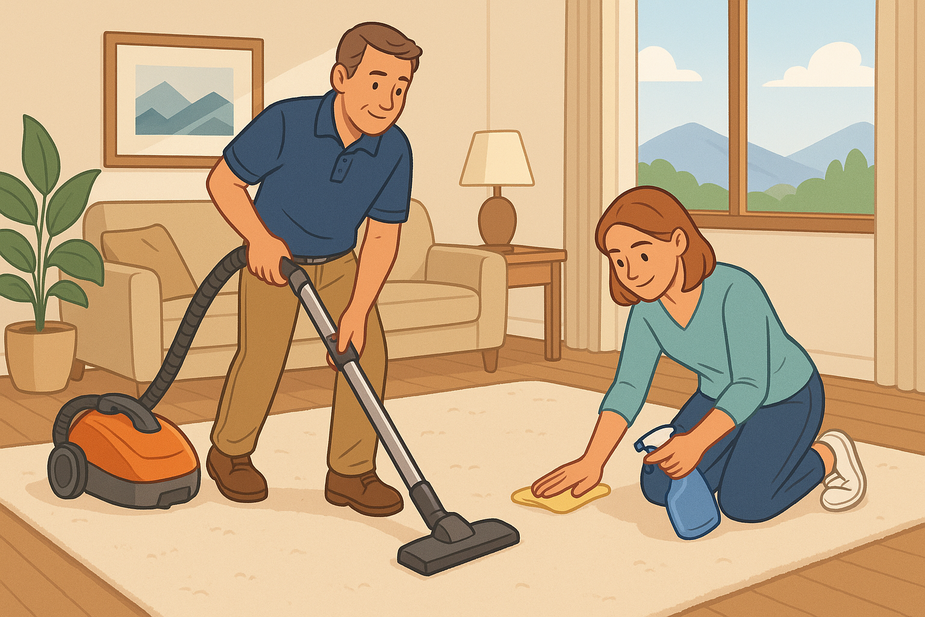
The Carpet and Rug Institute recommends vacuuming high-traffic areas — hallways, living rooms, and entry zones — at least twice per week, and lower-traffic rooms like bedrooms at minimum once per week. Frequency matters, but so does technique. Slow, overlapping passes remove significantly more embedded dry soil than quick single-direction passes. Professional cleaning industry testing consistently confirms this difference. For Denver households dealing with dry, dusty air, pet dander, and the fine particulate associated with Colorado’s air quality events, a vacuum with strong HEPA-rated filtration is worth the investment. Regular vacuuming is the single most impactful daily habit for extending carpet life because it removes abrasive grit before it can migrate down to the pile base and begin the fiber-cutting process described above.
Use Entrance Mats and Consider a No-Shoes Policy
Industry guidance consistently identifies shoe-tracked soil as the primary delivery mechanism for carpet-damaging debris. A two-mat system at every home entry point works well: an outdoor scraper mat to knock off grit, mud, and snow, and an indoor absorbent mat to capture remaining moisture and fine particles. For Denver homeowners coming in from muddy trails, construction sites, snowy sidewalks, and parking lots treated with de-icing chemicals, this setup is especially valuable. Pair it with a no-shoes-indoors household policy and you dramatically reduce the incoming soil load that drives carpet wear. The fewer abrasive particles that enter, the slower the carpet degrades.
Treat Spills Immediately — The Right Way
Blot, never scrub. Scrubbing spreads the stain outward and distorts the pile structure, causing fiber fuzzing that is cosmetically damaging and difficult to reverse. Start with plain cool water and clean white cloths. Most professional cleaning organizations caution against aggressive DIY chemical products that can bleach fibers, leave sticky residues that attract future soil, or over-wet the carpet and damage the backing. The most important principle is speed: a fresh spill is dramatically easier to address than one that has been sitting for even thirty minutes.
Rearrange Furniture Periodically
Shifting furniture even a few inches every few months redistributes foot traffic patterns, preventing the same high-wear lanes from bearing all the stress. Always use furniture pads or cups under heavy furniture legs to prevent deep pile compression. Some compression can relax with professional cleaning and grooming, but long-term deep indentations from heavy furniture legs can become permanent if left in place for years.
Layer Area Rugs in High-Traffic Zones
Placing washable area rugs or runners over carpet in heavily used areas — hallways, in front of sofas, near kitchen transitions — protects the installed carpet underneath from accelerated abrasion. Area rugs are significantly cheaper and easier to replace than wall-to-wall carpet, making them a smart protective layer that absorbs daily wear in the zones that need it most.
Keep Pet Nails Trimmed
Long or rough pet nails can snag carpet loops and pull individual fibers, particularly on looped or Berber carpet styles. Once a loop is pulled, the damage tends to spread. Regular nail trimming and smoothing of rough nail edges is a low-cost step that meaningfully reduces this type of mechanical wear for the many pet-owning families throughout Arvada and the Denver area.
The Role of Regular Professional Carpet Cleaning
Even excellent vacuuming and diligent spot care have physical limits. Consumer vacuums — regardless of quality — remove surface and mid-pile soil but cannot reach the deep-seated particles, oils, and biological residues that gradually accumulate near the carpet backing. Cooking oils, body oils, pet residues, and airborne pollutants bond progressively to fibers and act as soil magnets. Carpet with this kind of deep buildup resoils faster and looks dull even shortly after vacuuming. This is not a failure of the homeowner’s habits. It is simply a physical limitation of what surface maintenance can reach. That is exactly what professional deep cleaning is designed to address.
What Hot Water Extraction Actually Does
Hot water extraction — commonly called steam cleaning — works by injecting a heated cleaning solution deep into carpet fibers at controlled pressure. The heat is critical: it improves the ability of cleaning agents to suspend and loosen soil, oils, and biological contaminants that have bonded to fiber surfaces throughout the pile. Professional technicians select appropriate cleaning agents based on carpet fiber type and the nature of the soil rather than applying a single product to every job. High-powered professional extraction equipment then simultaneously flushes the loosened material — dirt, allergens, pet residues, bacteria — back out of the pile and backing in one integrated process. This is fundamentally different from consumer rental machines, which operate at lower temperatures and lower extraction power, leaving more moisture and residue behind. The IICRC — the Institute of Inspection, Cleaning and Restoration Certification — recognizes hot water extraction as the standard for effective periodic deep cleaning and links it to maintaining carpet warranty coverage with most major manufacturers. Cleaning frequency of every 12 to 18 months is the generally recognized standard for maintaining both performance and warranty protection.
How Professional Cleaning Directly Extends Carpet Life
The regular carpet cleaning benefits here are concrete and cumulative. Professional extraction removes abrasive grit from deep within the pile before it can continue cutting fibers from below — directly addressing the number one cause of premature carpet wear. It restores fiber structure and pile appearance: carpet that looks flat, matted, and gray often recovers meaningfully after a professional session because the soil masking its color and texture has been fully removed. It eliminates the oily films that cause carpet to resoil faster, meaning properly cleaned carpet actually stays cleaner longer between visits. It addresses odors and biological contaminants — pet urine residues, dust mite matter, bacteria, and mold spores — that routine vacuuming cannot extract. And because carpet acts as a reservoir for dust, allergens, and fine particulate matter, the EPA’s indoor air quality guidance supports professional cleaning as a meaningful step toward healthier indoor air for families and especially for those with respiratory sensitivities.
The Math — Cleaning vs. Replacing
Professional carpet cleaning in the Denver area typically runs from approximately fifteen to fifty cents per square foot, translating to a few hundred dollars per visit for most homes depending on size and condition. Full carpet replacement — materials, padding, and installation combined — typically runs several thousand dollars for a standard Denver-area home. Professional cleaning is a predictable, manageable maintenance cost that delays a much larger expense, in the same way that oil changes protect an engine from premature failure. The warranty dimension matters too: many carpet manufacturers require documented proof of professional cleaning at regular intervals as a condition of warranty coverage. Skipping professional cleaning does not just reduce carpet longevity — it can void the warranty protection entirely.
How Often Should You Schedule Professional Carpet Cleaning?
The right frequency depends on how your household actually lives, not a one-size-fits-all answer. Here is a practical breakdown by situation:
- Standard household, mostly adults, low foot traffic: Every 12 to 18 months. No pets, limited occupants, primarily adult use.
- Families with children: Every 6 to 12 months. Children introduce more activity, food and beverage spills, and tracked-in school debris that compounds quickly.
- Pet owners: Every 6 months minimum, and sooner following significant accidents. Pet hair, dander, body oils, and urine residues require more frequent professional attention to prevent fiber degradation, odor buildup, and allergen accumulation.
- Allergy or asthma sufferers: Every 6 months, combined with HEPA vacuuming and good ventilation. Professional cleaning reduces allergen reservoirs — dust mites, dander, pollen — that affect indoor air quality. This is especially relevant in Colorado where dry air keeps fine particles suspended longer than in humid climates.
- Rental properties and Airbnb hosts: Between every tenant or major guest cycle, and at minimum annually for long-term rentals. Carpet condition directly affects guest reviews, security deposit disputes, and a property’s perceived value. Professional cleaning between turnovers is both a quality and a financial protection measure.
- High-traffic home offices or commercial spaces: Every 3 to 6 months depending on volume of use.
For Denver and Arvada homeowners specifically, two scheduling windows make particular practical sense. Early spring — after the winter season of road salt, sand, mud, and snowmelt — is the natural and strategically smart time to flush out the season’s accumulated chemical residues. Fall — before the holiday season, increased indoor time, and winter begins — is the second ideal window. Building these two seasonal appointments into annual home maintenance turns professional carpet cleaning from a reactive emergency into a proactive investment.
Carpet Care in Denver — Local Factors That Make a Real Difference
Generic national carpet care guides do not account for the specific realities of living in the Denver Metro Area. These local factors genuinely change the math on how often and how carefully carpet needs attention here.
Colorado’s Dry Climate and Static
Denver’s low humidity — the region averages significantly less moisture in the air than most major U.S. cities — affects carpet fibers directly. Dry air can cause carpet fibers to become more brittle over time, making them more susceptible to breaking and matting under consistent foot traffic. Static buildup is also more common in dry conditions. Electrostatically charged fibers attract and hold fine particulate matter — dust, dander, pollen, smoke particles — making thorough vacuuming and regular deep cleaning especially important for Denver households compared to those in more temperate, humid regions.
Winter Salt, Sand, and De-Icer Season
Colorado winters bring beautiful snow and also sidewalks, parking lots, and roads treated with sand, salt, and chemical de-icers. These residues end up tracked into homes on boot soles and pet paws throughout the season. They can create visible white crusty spots on carpet, draw additional moisture from the air, and — if left for extended periods — potentially degrade certain carpet dyes or backing materials. Managing this effectively means maintaining robust two-mat entrance systems at every door, increasing vacuuming frequency during winter months, and scheduling a professional deep cleaning each spring to fully flush accumulated salt, chemical residue, and winter soil from deep in the pile. That spring cleaning appointment is not optional for Denver carpet longevity — it is a necessary reset after a chemically demanding season.
Trail Dust, Red Clay, and the Active Denver Lifestyle
Denver residents have daily access to outstanding hiking trails, mountain bike paths, open space parks, and sports facilities. That lifestyle brings gritty, fine-particulate trail soil into homes constantly. Trail dust and red clay soil are particularly fine and penetrating — they settle deep into carpet pile quickly and are among the more abrasive soil types for carpet fibers. This is a genuine reason why Denver and Arvada homeowners benefit from slightly more frequent professional cleaning schedules than generic national guidance would suggest. Their carpets are genuinely working harder.
Wildfire Smoke and Colorado Air Quality Events
Colorado’s Front Range communities have experienced increasingly frequent poor air quality periods from regional wildfire smoke. Fine particulate matter from wildfire smoke infiltrates indoor spaces even when windows and doors are closed, and carpet and soft furnishings act as reservoirs for these particles, trapping them in the pile. The EPA recognizes that carpets accumulate fine indoor air pollutants including combustion particles, and that professional cleaning helps reduce these accumulated loads. Following prolonged smoke events, a professional deep cleaning is a particularly valuable step for Denver homeowners concerned about indoor air quality and the health of family members with respiratory sensitivities.
Signs Your Carpet Needs Professional Attention Right Now
Use this as a quick self-assessment. If any of these apply to your home, it is time to schedule a professional cleaning rather than wait for the next scheduled interval.
- Carpet looks dull, gray, or flat even right after vacuuming. This indicates embedded soil and crushed pile that surface cleaning cannot reach. Abrasive particles have built up deep in the pile and professional agitation and extraction are needed to restore both appearance and fiber health.
- Persistent odors — pet smell, mustiness, or a general stale smell — that return quickly after surface deodorizing. Odors that keep coming back typically indicate contamination that has reached the backing or pad, areas that consumer products and vacuums cannot address. Professional treatment with targeted chemistry and extraction is required.
- Visible traffic lanes — dark, worn-looking paths in hallways or in front of furniture. This is clear evidence of accumulated abrasive soil and compressed pile. The sooner these areas receive professional cleaning, the better the chance of meaningful restoration before fiber damage becomes irreversible.
- Allergy or respiratory symptoms feel worse indoors than outdoors. Carpet acts as a significant reservoir for dust mite matter, pet dander, pollen, and fine particulate. If indoor symptoms are noticeably worse, professional cleaning to reduce these allergen loads is a meaningful health step, consistent with EPA indoor air quality guidance.
- It has been over 12 to 18 months since the last professional cleaning. Beyond this window, most carpets benefit from a thorough professional reset regardless of surface appearance. This is the manufacturer and industry standard for a reason.
- Recent pet accidents, water intrusion, or major spills. These situations require professional equipment to address fully. DIY response addresses the surface but typically cannot reach the backing or pad where lasting damage and odor develop.
- Preparing to sell, rent out, or transfer a property. Clean, fresh-smelling carpet is one of the highest-impact first-impression factors in any property. Professional cleaning before a sale, listing, or tenant transition is a straightforward investment with a clear and measurable return.
The Carpet Couch Cleaning LLC Approach to Long-Term Carpet Care in Denver
Everything described in this post — the fiber wear mechanisms, the maintenance habits, the professional deep cleaning process — reflects exactly how the team at Carpet Couch Cleaning LLC approaches carpet care across Arvada and the greater Denver Metro Area every day.
Carpet Couch Cleaning LLC uses professional hot water extraction equipment that is categorically different from consumer rental machines. Professional systems operate at significantly higher temperatures and extraction pressure, delivering a deeper clean with faster drying times and more complete removal of soil from deep within the pile and backing. The higher temperature is not incidental — it is essential for loosening oils, biological residues, and bonded contaminants that lower-temperature equipment simply cannot address effectively.
The company uses eco-friendly and pet-safe cleaning solutions throughout every job. For Denver families with young children, pets, or household members with chemical sensitivities, this matters. Professional-grade eco-friendly solutions clean effectively while being safe for the people and animals who live in the home — which is a direct expression of the ‘Clean home, healthy life’ philosophy that guides Carpet Couch Cleaning LLC’s work.
The team’s approach is also informed by genuine local knowledge. Having served homes throughout Arvada and across the Denver Metro Area, Carpet Couch Cleaning LLC understands the specific carpet care challenges of this region intimately: the dry, static-prone climate that holds fine particulate in the pile, the winter salt and de-icer seasons that deposit harsh chemical residues, the trail dust and red clay that active Denver lifestyles bring indoors, and the wildfire smoke periods that require targeted intervention. Generic national cleaning protocols do not account for these realities. Carpet Couch Cleaning LLC does.
The company’s cleaning approach aligns with IICRC standards and best practices for fiber-safe deep cleaning — the same professional body that manufacturers reference in carpet warranty requirements. Whether serving homeowners, landlords, property managers, Airbnb hosts, or real estate clients throughout the Denver area, Carpet Couch Cleaning LLC brings the equipment, trained expertise, and locally informed knowledge to deliver results that genuinely protect carpet investments for the long term.
Protect Your Investment With the Right Care
Extending carpet life is not complicated. It is about consistency. Simple, regular daily and weekly habits — vacuuming thoroughly and often, using entrance mats, responding quickly to spills, keeping pet nails trimmed, rearranging furniture periodically — form the foundation. Scheduled professional deep cleaning at appropriate intervals is the essential component that makes all those daily habits fully effective, resetting the carpet from the deep pile up in ways that surface maintenance cannot.
Carpet in a Denver home works hard. Dry, dusty air, snowy winters with road salt, muddy trail seasons, wildfire smoke, active families, and beloved pets all take a genuine toll. Taking proper care of that carpet is how it pays back the investment — staying comfortable, beautiful, and healthy under daily use for years longer than neglected carpet ever would.
Carpet Couch Cleaning LLC has helped hundreds of Denver Metro Area homeowners protect their carpet investments with professional, eco-friendly deep cleaning that delivers real, lasting results. If your carpet is overdue for a professional reset — or if you just want to be proactive about protecting a home you care about — reach out to the team at Carpet Couch Cleaning LLC. They serve Arvada and the entire Denver Metro Area with the equipment, expertise, and locally informed care that your home deserves. Ready to give your carpet the deep clean it needs? Carpet Couch Cleaning LLC is here to help.