Picture this: It’s a Tuesday evening in April, and a mom in Arvada is sitting on her living room couch rubbing her eyes for what feels like the hundredth time today. Her eight-year-old has been sneezing since he got home from school. The windows have been shut since March. She just vacuumed yesterday. There’s an air purifier humming in the corner. And yet somehow, everyone’s sinuses are staging a full revolt inside the very home that’s supposed to be their safe space.
If that scene sounds familiar, you are not imagining things, and you are definitely not alone. Millions of families across the Denver Metro Area deal with this exact frustration every spring — and honestly, every season. You are already doing the right things. You are vacuuming regularly, running the purifier, keeping the windows shut on high-pollen days. You are making real effort. But there is one piece of the puzzle that most allergy-focused cleaning routines completely miss, and it is literally under your feet.
Your carpet is almost certainly contributing more to your indoor allergen problem than you realize. Carpet fibers function like a giant filter for your home — they catch and hold dust mites, pollen, pet dander, mold spores, and other particles, pulling them down out of the air you breathe. In the beginning, that filtering effect is actually helpful. But over months and years, as that filter becomes saturated, everything changes. Every step across the room, every time your dog charges through the living room, every time your heating system kicks on and pushes air through your home, some of that trapped allergen load gets stirred back up into the breathing zone right where your family lives.
If you have been wondering about carpet cleaning for allergies — which methods actually work, what your current routine is missing, and how to make your home genuinely healthier instead of just cleaner-looking — this guide walks you through everything you need to know. Carpet Couch Cleaning LLC serves families, pet owners, and allergy sufferers throughout Arvada and the greater Denver Metro Area, and every piece of advice in this guide comes from real professional experience working in Colorado homes just like yours.
What’s Actually Living in Your Carpet (The Allergen Breakdown)
Before you can solve the problem, it helps to understand exactly what you are dealing with. Most homeowners are aware of one or two allergen types in their carpet — usually pet hair or dust. The reality is that carpet can harbor four distinct categories of allergens simultaneously, and each one affects allergy and asthma sufferers in its own way.
Dust Mites
Dust mites are microscopic arthropods that are completely invisible to the naked eye. They live and thrive in soft furnishings throughout the home — carpet, upholstered furniture, and bedding are their primary habitats. They feed on shed human skin cells, which carpet fibers collect in generous supply every single day. Here is the critical thing to understand: the allergens from dust mites do not actually come from the mites themselves. They come from the mites’ waste particles, which are fine enough to become airborne and be inhaled deep into the lungs. This is why dust mite exposure is one of the leading triggers for asthma and allergic rhinitis worldwide. Carpets and mattresses are recognized as the primary reservoirs for dust mite allergen inside a residential home, and routine vacuuming alone cannot meaningfully reduce the biological load they leave behind.
Pet Dander
Pet dander is not the same thing as pet hair. It is microscopic flakes of dried skin shed by cats, dogs, and other animals — and it is significantly smaller and lighter than ordinary household dust. Because of that light weight, pet dander stays airborne for much longer before it eventually settles down into carpet and upholstery fibers. Even households with consistent vacuuming routines will have embedded pet dander deep in their carpet that a standard vacuum simply cannot reach or remove. For households where a dog sleeps in the living room or a cat has claimed a favorite chair, that embedded dander accumulates faster than most pet owners expect. Professional deep cleaning is one of the few effective approaches for pulling deep-seated pet dander out of carpet fibers rather than just disturbing it temporarily.
Pollen
Outdoor pollen does not politely stay outside. It hitchhikes into your home on shoes, clothing, hair, and the fur of your pets, and it gets worked steadily deeper into the carpet pile with every step taken across it. In the Denver Metro Area and along the Front Range, this matters significantly. Colorado’s spring brings intense tree and grass pollen seasons, and after the dry, gusty days that are completely normal along the Front Range, the pollen concentration tracked indoors can be substantial. The carpet acts as a temporary pollen sink — which slows how much stays airborne — but once it is saturated, there is nowhere left for it to go except back into the air. The EPA’s indoor air quality guidance notes that indoor levels of pollutants can be two to five times higher than outdoor levels, and sometimes considerably more, largely because modern homes are tightly sealed and most people spend roughly ninety percent of their time indoors.
Mold Spores
Mold can develop in carpet backing and padding when moisture is present for too long — from a slow appliance leak, an unnoticed spill, or a DIY cleaning attempt that left the carpet wet for days. Mold needs moisture and organic material to grow, and carpet padding provides both. Colorado’s dry climate is generally less hospitable to mold than more humid regions, but it is not immune, especially after any water exposure that is not promptly and thoroughly dried. Maintaining indoor relative humidity in the thirty to fifty percent range is a recommended preventive measure for limiting mold growth in carpets and household materials generally.
Think of your carpet as a large, wall-to-wall air filter. When it is regularly maintained, it holds allergen particles away from the air your family breathes. But when it becomes saturated — full of months or years of accumulated buildup — it starts working against you. Every step your child takes across the floor, every time your dog races through the room, every time your heating system cycles on, some portion of that trapped load gets pushed back into the air right at the level where your family is breathing, playing, and sleeping.
Why Regular Vacuuming Isn’t Enough for Allergy Relief
Here is something important to say upfront: vacuuming matters, and you should keep doing it. This is not about dismissing what you are already doing. It is about understanding what vacuuming is designed to accomplish and where it genuinely falls short for allergy sufferers.
Vacuuming is genuinely effective at removing loose, dry soil from the upper portion of the carpet pile. Done correctly and consistently, routine vacuuming can remove roughly ninety to ninety-five percent of dry surface soil by weight. That sounds impressive — and it is, for what it is. But the challenge for allergy sufferers is not primarily loose surface soil.
Fine allergen particles, dust mite waste matter, and pet dander proteins that have bonded to carpet fibers deep in the pile and backing are a fundamentally different problem. No matter how high-end a household vacuum is, it cannot reach what has worked its way into the deeper layers of the carpet structure. The suction simply does not extend that far into the pile.
Filtration is another significant variable. Vacuums without HEPA filtration can actually worsen allergen exposure for sensitive individuals. The machine picks up fine particles effectively, but without proper filtration trapping them, the exhaust air vents those same fine particulates — including broken-down allergen fragments — right back into the room. The carpet may look cleaner, but the air immediately after vacuuming can carry a higher allergen concentration than before you started. Any household where someone suffers from allergies or asthma should be using a vacuum with a certified HEPA filter as a basic standard.
Beyond filtration and reach, there is a more fundamental limitation. Vacuuming does not neutralize dust mite waste or remove the proteins in pet dander that have become embedded and sticky within carpet fibers. These biological residues require moisture, heat, cleaning agents, and powerful extraction to be loosened and fully pulled out. Suction alone simply is not up to that task.
For allergy sufferers, there is also a real danger in what might be called the visual clean trap. A carpet that looks clean and smells reasonably fresh can still harbor a significant allergen reservoir in the microscopic spaces between fibers, in the backing material, and in the padding beneath. Appearances in this context are genuinely misleading.
This is exactly why deep carpet cleaning for allergies is a completely different process than routine vacuuming — one that requires professional-grade equipment, heat, and extraction specifically designed to reach and remove what ordinary cleaning leaves behind.
What Makes a Carpet Cleaning Method Truly Allergy-Safe?
Not all professional carpet cleaning is created equal when it comes to allergy relief. There are five specific qualities that separate a cleaning that genuinely reduces allergen exposure from one that simply improves how the carpet looks. Understanding these criteria helps you make an informed choice rather than assuming any professional service will deliver the results your household needs.
Extraction Depth
Effective allergy-focused carpet cleaning must flush and extract allergens from deep within the carpet pile and into the backing — not just the visible surface layer. Professional hot water extraction systems are specifically engineered to reach embedded soils and contaminants at depths that household vacuuming cannot access.
Heat
High-temperature water is one of the most important tools for dust mite control. Dust mites are heat-sensitive and cannot survive the elevated temperatures used in professional hot water extraction. Beyond killing mites, heat also helps loosen the oily residues that bind allergen particles to carpet fibers, making genuine extraction possible. Health and cleaning experts consistently identify hot water cleaning as significantly more effective for dust mite reduction than cold or low-moisture methods.
Residue-Free or Low-Residue Cleaning Agents
Many allergy sufferers have an instinctive concern about cleaning chemicals — and that concern is well-founded. Harsh, heavily fragranced, or low-quality carpet cleaning products can leave residues in carpet fibers that irritate airways, eyes, and skin. These residues may contain volatile organic compounds that off-gas from the carpet long after the cleaning technician has left. They also cause carpet to re-soil faster, meaning allergens accumulate again more quickly than they should. Genuine hypoallergenic carpet cleaning uses eco-friendly, low-VOC, low-residue formulations designed to rinse completely clean and leave no irritating chemistry behind.
Proper and Complete Drying
Inadequate drying after a carpet cleaning creates an entirely new problem. Moisture-saturated carpet backing and padding become ideal conditions for mold and mildew growth. For an allergy-prone family, trading a dust mite problem for a mold problem is not an improvement — it is a lateral move at best. Professional-grade extraction equipment removes dramatically more water from carpet than rental machines or DIY methods can manage, and the use of air movers speeds drying further. In Colorado, properly managed drying actually benefits from the state’s naturally low humidity.
HEPA-Filtered Professional Equipment
Professional-grade cleaning equipment from quality providers includes HEPA filtration, which captures fine allergen particles during the cleaning process rather than recirculating them back through the home’s air. This is a meaningful distinction from both consumer rental machines and lower-quality professional services that use older or under-maintained equipment.
When you are evaluating allergy safe carpet cleaners, these five criteria — extraction depth, heat, low-residue solutions, proper drying, and HEPA-filtered equipment — are the non-negotiables. Together, they define what true hypoallergenic carpet cleaning actually looks like in practice.
The Most Effective Method: Hot Water Extraction and Deep Carpet Cleaning for Allergies
Hot water extraction — the method most homeowners know as steam cleaning — is the gold standard for allergen removal from residential carpet. The carpet industry and health-focused resources consistently recommend it over all other methods for removing embedded allergens that cannot be addressed by surface cleaning alone.
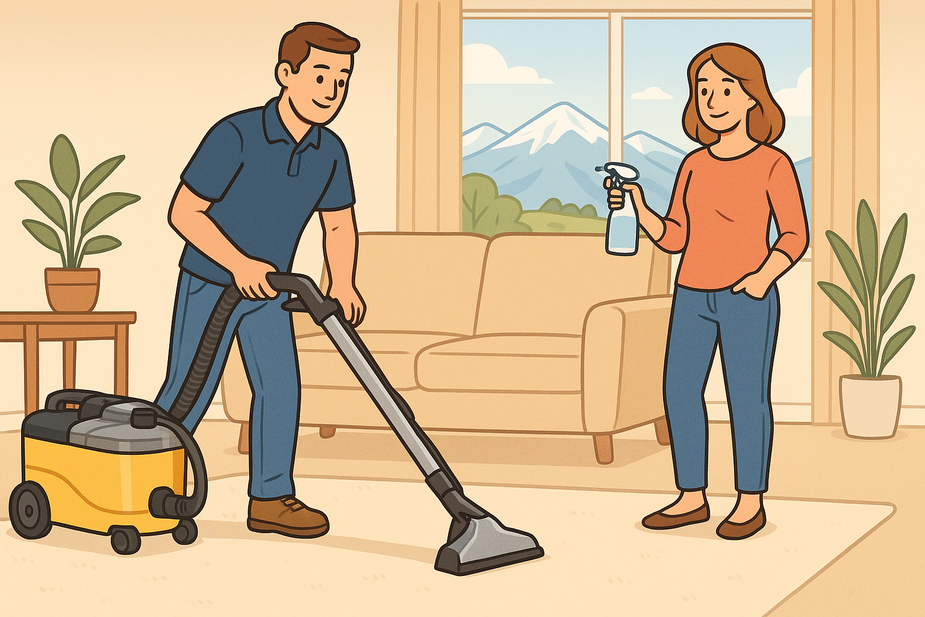
Here is how the process actually works in plain terms: hot water combined with a cleaning solution is injected under pressure deep into the carpet fibers, all the way through the pile and into the backing. That hot water and solution penetrate the layers where allergens, shed skin cells, dust mite waste, and the biological residues binding them to the fibers have accumulated. Then, simultaneously, a powerful vacuum system extracts the water and all of the suspended contaminants into a sealed waste tank. The key word there is removes. Allergens are not masked, deodorized, or redistributed — they are physically pulled out of the carpet and out of your home.
The heat component carries particular importance for deep carpet cleaning for allergies. Dust mites and many bacteria are sensitive to elevated temperatures and are killed or inactivated by the heat delivered during professional hot water extraction. This is a meaningful advantage that cold-water and low-moisture methods simply cannot replicate, because while those approaches may improve the appearance of carpet, they leave the biological allergen load largely intact.
A quick note on terminology that trips up many Denver Metro homeowners: what most people call steam cleaning is, in professional practice, hot water extraction. True dry steam vapor cleaning is a separate and much less common method. When professional carpet cleaners — including the team at Carpet Couch Cleaning LLC — talk about deep cleaning, they mean hot water extraction: pressurized hot water, eco-friendly cleaning solution, deep injection into the pile, and powerful suction recovery.
Dry compound methods and low-moisture spray approaches have their place, but they generally do not deliver the same depth of flushing and allergen extraction. Consumer rental machines present a different set of limitations: they cannot heat water to the same temperatures as professional truck-mounted equipment, their suction and recovery power is substantially weaker, and the result is often carpet left wetter for longer and less thoroughly rinsed — exactly the conditions that can encourage mold growth rather than improve indoor air quality.
For Denver Metro families dealing with allergy symptoms, deep carpet cleaning for allergies using hot water extraction is the clear choice backed by both industry standards and practical results. It is also why the most effective allergy safe carpet cleaners rely on professional hot water extraction rather than surface-level methods to deliver real, lasting allergen reduction.
The Carpet Couch Cleaning LLC Approach: Eco-Friendly Solutions That Don’t Trade One Problem for Another
There is a concern that allergy-sensitive homeowners often have but rarely say out loud: *’Won’t the cleaning chemicals make my allergies worse?’* This is a smart, completely legitimate question — and one that Carpet Couch Cleaning LLC takes seriously on every single job.
Low-quality, heavily fragranced, or chemically aggressive cleaning products can leave residues in carpet fibers that irritate airways, eyes, and skin — particularly for people with asthma, chemical sensitivities, or existing allergies. These products may contain volatile organic compounds that continue to off-gas from the carpet for hours or days after cleaning. They also cause carpet fibers to re-soil faster, which means the allergen problem returns more quickly than it should, and you are back to square one sooner than your investment deserves.
At Carpet Couch Cleaning LLC, the product philosophy centers on eco-friendly, low-VOC, non-toxic cleaning solutions specifically selected for allergy-sensitive households. These formulations are chosen because they clean effectively while leaving behind no harsh chemical residues. When the cleaning is finished, what remains in your carpet is clean fiber — not a fresh layer of chemical irritants sitting on top of the problem you hired a professional to remove. The entire approach to hypoallergenic carpet cleaning at Carpet Couch Cleaning LLC is built on this principle: remove what harms you without replacing it with something else that harms you.
This product philosophy matters most for households with young children. Toddlers and kids spend a significant portion of their time directly on carpet — crawling, rolling, playing, lying face-down watching television. Their hands and faces are in direct contact with whatever is living in those fibers, whether that is a dust mite allergen load or the residue from an aggressive cleaning agent. For these households, genuine hypoallergenic carpet cleaning means not only removing the allergen reservoir but ensuring that every solution used in the process is as gentle and non-irritating as possible.
The team at Carpet Couch Cleaning LLC uses professional-grade truck-mounted and portable extraction equipment to deliver the water temperature, pressure, and suction power that genuine deep allergen removal requires — capabilities that rental machines from the hardware store simply cannot match. The combination of the right equipment and the right eco-friendly solutions is what separates a cleaning that looks good on the surface from one that measurably reduces the allergen load throughout your home.
Carpet Couch Cleaning LLC has extensive experience serving homes throughout Arvada, Denver, and the broader Denver Metro Area, and understands the specific allergen challenges Colorado families face across every season — from the intense Front Range pollen seasons of spring and fall to the long winter months when homes are sealed tight and forced-air heating systems recirculate whatever is living in your carpet through every room in the house.
Colorado Seasons and Your Carpet: The Best Times for Denver Metro Allergy Sufferers to Schedule a Cleaning
One of the most practical things an allergy-prone Denver Metro homeowner can do is align their professional carpet cleaning schedule to Colorado’s seasonal allergen calendar — because the timing of a cleaning directly affects how much relief it delivers.
Spring — Clear the Winter Buildup Before Pollen Season Peaks
Spring is peak pollen season on the Front Range. Trees, grasses, and early-blooming plants release pollen in significant volumes, and it enters the home constantly through shoes, clothing, hair, and pets. Critically, spring also marks the end of a long, sealed-up winter during which allergens have been accumulating and concentrating indoors with minimal fresh air exchange. A professional deep clean in early-to-mid spring clears out the built-up winter load before the heaviest pollen season begins tracking even more allergens inside — which means you are starting the outdoor allergy season with a cleaner indoor baseline rather than compounding the problem.
Summer — Active Households Mean Accelerated Accumulation
Summer in the Denver Metro Area means increased indoor-outdoor movement: kids in and out all day, dogs tromping in from the backyard, windows open on the cooler mornings. This combination accelerates how quickly pollen, dirt, and pet dander build up in carpet. Families with multiple children or active pets may find that summer requires more frequent attention to keep allergen levels manageable.
Fall — Reset Before the Long Seal-Up
Fall brings a second significant pollen wave — particularly from weed pollens, which are substantial along the Colorado Front Range — along with the beginning of the heating season. A professional cleaning in early fall removes the summer’s accumulated allergen load before the home is sealed for winter and before the heating system starts circulating carpet-borne particulates through every room in the house. This is one of the highest-value timing windows for allergy relief in Colorado, and it is consistently the one most homeowners miss.
Winter — Peak Indoor Concentration Season
Winter is typically when indoor allergen concentrations are at their highest for Colorado families. Homes are sealed for extended periods with minimal fresh air exchange. Forced-air heating systems pull air across carpet-level surfaces and distribute whatever is airborne throughout the entire house. Families who enter winter without a recent professional cleaning are allowing months of accumulated allergen load to cycle continuously through their home’s air with nowhere to go.
When it comes to carpet cleaning for allergies in Colorado, timing is not just a convenience — it is a meaningful part of how much relief you actually get. Industry guidance recommends professional carpet cleaning at least once or twice per year for most households. For allergy-prone homes in the Denver Metro Area, the team at Carpet Couch Cleaning LLC recommends at minimum a spring cleaning and a fall cleaning timed specifically to Colorado’s allergen calendar. Homes with multiple pets, young children, or household members with asthma or severe allergies may benefit from professional cleaning every three to four months, particularly in main living areas and bedrooms.
Beyond the Floor: Other Allergen Reservoirs in Your Home You May Be Overlooking
Carpets get most of the attention when it comes to allergen control — and for good reason. But they are not the only soft surfaces in a home that trap and harbor allergens. For families seriously managing allergy symptoms, addressing carpet alone is a partial solution at best.
Area Rugs and Decorative Rugs
Area rugs — including decorative, Persian, and wool rugs — sit in high-traffic areas and accumulate the same dust mites, pollen, and pet dander as wall-to-wall carpet. In many homes, they actually receive more direct foot traffic than carpeted rooms that are used less frequently. Most homeowners vacuum their area rugs regularly but rarely have them professionally deep-cleaned, which means they can quietly become some of the densest allergen reservoirs in the entire home over time. Carpet Couch Cleaning LLC provides professional rug cleaning for area rugs of all types throughout the Denver Metro Area.
Upholstered Furniture — Sofas, Armchairs, and Ottomans
Fabric sofas, armchairs, and upholstered ottomans function essentially like vertical carpets. They trap pet hair, pet dander, body oils, dust mites, and dead skin cells — and they do it in the exact locations where family members spend the most time sitting, reclining, and relaxing. For allergy sufferers, cleaning the carpet while leaving the upholstered furniture untouched means addressing roughly half the soft-surface allergen problem in any given room. Health resources consistently recommend including upholstery cleaning as part of any serious allergen-reduction plan, particularly in rooms used heavily for lounging or sleeping. Carpet Couch Cleaning LLC provides professional upholstery cleaning as part of its service offerings throughout the Denver Metro Area.
Mattresses
Mattresses are among the most significant but consistently overlooked dust mite habitats in the home. Dust mites thrive in mattresses because they have continuous access to both moisture from the sleeper’s perspiration and an abundant supply of shed skin cells. Given that the average person spends seven to eight hours every night in direct contact with their mattress, the allergen exposure from an unclean mattress can be substantial for asthma and allergy sufferers. For comprehensive dust mite control, combining mattress encasements, regular hot washing of bedding, and periodic professional mattress cleaning delivers far better results than any single approach alone. Carpet Couch Cleaning LLC offers professional mattress cleaning for Denver Metro Area homeowners looking to address allergen exposure at every level of the home.
The most effective allergen-reduction strategy is a whole-home one. When carpets, rugs, upholstery, and mattresses are all maintained together, the cumulative reduction in allergen load throughout your home is dramatically greater than addressing any single surface alone.
What to Expect When You Book a Professional Carpet Cleaning with Carpet Couch Cleaning LLC
One of the things that sometimes holds homeowners back from booking a professional carpet cleaning is simple uncertainty about what the process involves — how disruptive it will be, how long it takes, how long before the carpet is walkable again, and whether it is safe for kids and pets to be in the home. These are completely reasonable questions, and the answers are more reassuring than most people expect.
When you book with Carpet Couch Cleaning LLC, the process begins with a brief assessment of your carpet type, any staining or high-traffic area concerns, and any allergy-specific needs particular to your household — whether that is a toddler who spends time on the floor, a senior family member with asthma, or three dogs who have been claiming the living room rug as their own. You can ask specifically about eco-friendly or fragrance-free solution options, and the team will explain exactly what products will be used before any cleaning begins. Your primary preparation task is simply picking up small items from carpeted areas. A quick surface vacuum beforehand can be helpful but is absolutely not required.
During the cleaning, high-traffic areas, spots, and stains are pre-treated to loosen stubborn soils before extraction begins. Then hot water and eco-friendly cleaning solution are worked deep into the carpet fibers, and the powerful extraction system simultaneously recovers the water, solution, and all of the contaminants they have loosened — pulling them out of the carpet and into a sealed waste tank. The time required depends on the square footage, the level of soiling, and the number of rooms being cleaned, but most residential appointments are completed efficiently without requiring the family to vacate the home for the day.
After the cleaning, carpet is typically walkable within a few hours, with full drying usually complete within twelve to twenty-four hours depending on ventilation, airflow, and the season. Using fans and opening windows when weather allows speeds the process. The eco-friendly solutions used by Carpet Couch Cleaning LLC are safe for children and pets once the carpet has dried — which is part of why product selection matters so much to the approach the company takes in every home it serves.
Ready to Breathe Easier? Take the Next Step
If you or someone in your household has been struggling with allergy symptoms that seem worse at home than anywhere else, the carpet beneath your feet may be holding far more of the answer than you realized. A professional deep cleaning — done with the right equipment, the right temperatures, and the right eco-friendly solutions — can make a measurable difference in the allergen load your family is exposed to every single day.
Carpet Couch Cleaning LLC is here to help Denver Metro Area families create genuinely healthier homes, not just cleaner-looking ones. Whether you are dealing with pet dander from a house full of dogs, a spring pollen season that has taken over your living room carpet, or simply years of accumulated buildup that regular vacuuming was never designed to remove, the team is ready to walk you through your options and build a cleaning plan that fits your home and your household’s specific needs. Reach out to Carpet Couch Cleaning LLC today to get started — your family’s next breath of truly fresh indoor air may be closer than you think.