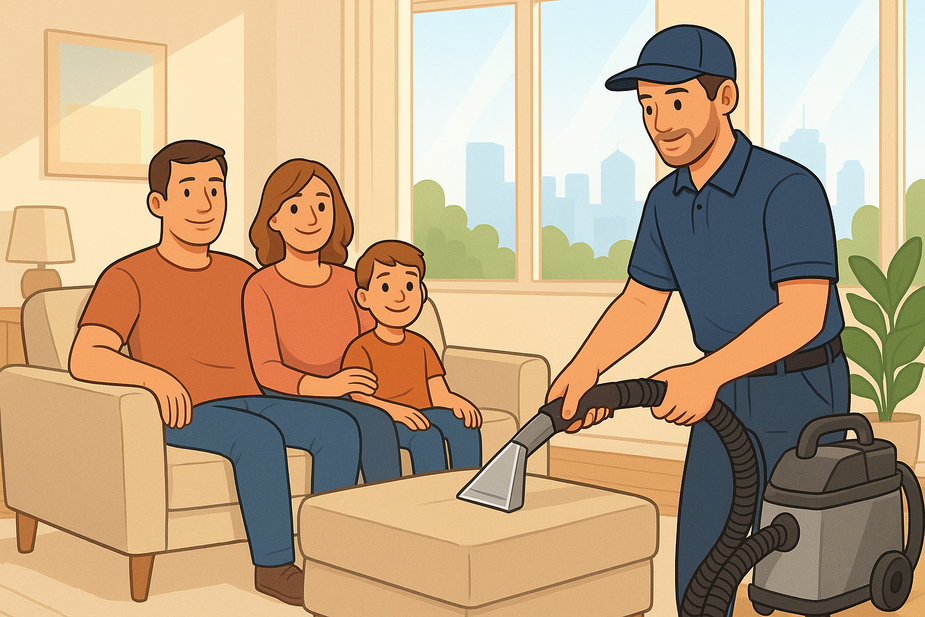
Picture a typical Denver family during a long Colorado winter. The temperatures have dropped, the snow is piling up outside, and the whole household has migrated to the living room. The kids are doing homework on the sectional, the dog has claimed his favorite corner cushion, and everyone settles in for a movie night. It is warm, comfortable, and familiar. But here is a question worth sitting with: when was the last time that couch was actually deep cleaned?
Most homeowners are genuinely conscientious about keeping their homes tidy. Floors get vacuumed, kitchen counters get wiped down, and bed linens get washed on a regular rotation. But the sofa — arguably the most-used surface in the entire home — tends to get overlooked. It might not look dirty. There may not be an obvious stain or a noticeable smell. But upholstered furniture quietly accumulates dust, pet hair, body oils, food particles, and airborne pollutants over time, even when it looks perfectly clean to the naked eye.
Understanding the full upholstery cleaning benefits — beyond just removing a visible stain — is the first step toward a genuinely cleaner, healthier home. This guide walks through exactly what is building up inside your upholstery, why it matters for your family’s health, and what professional cleaning actually delivers that ordinary vacuuming and store-bought sprays simply cannot.
What’s Actually Hiding Inside Your Sofa and Upholstered Furniture?
Before getting into the benefits of cleaning, it helps to understand what professional cleaners are actually removing. This is not about alarming anyone — this accumulation is completely normal for any piece of furniture that gets regular, everyday use. But knowing what is there makes the case for addressing it much more concrete and practical.
Dust Mites and Their Waste
Household textiles — including upholstery, carpets, and mattresses — are well-known reservoirs for dust mites and their fecal particles, which rank among the most common indoor allergens. The mechanics are straightforward and worth understanding: when someone sits down or shifts position on the sofa, these microscopic particles can become briefly airborne and be inhaled by anyone nearby. For household members with allergies or asthma, this is not a minor inconvenience — it is a daily, repeated exposure happening in the room where they spend the most time.
Pet Dander and Hair
Pet dander — the tiny skin flakes shed continuously by cats, dogs, and other animals — embeds deeply into fabric fibers and the cushion padding beneath them. Unlike the visible pet hair you can see and remove with a lint roller, dander is microscopic and cannot be meaningfully reduced by surface vacuuming alone. For Denver-area households, where pet ownership rates are exceptionally high, this is one of the most significant sources of allergen buildup on soft furnishings in the home. Regular upholstery cleaning helps mitigate this issue effectively.
Dead Skin Cells and Body Oils
The human body naturally sheds skin cells and deposits body oils and trace amounts of sweat onto soft surfaces through ordinary daily contact. Over months and years, this organic material builds up in upholstery fibers, contributing to fabric discoloration, persistent odors, and creating an environment where bacteria can establish themselves and grow. This process happens gradually and invisibly, which is part of why it tends to go unaddressed for so long.
Bacteria from Food, Hands, and Pets
Upholstered furniture is among the highest-contact surfaces in any home. People eat on their sofas, nap on them, and allow pets to climb on them every day. Bacteria from food spills, hands, and pet contact can remain embedded in fabric fibers long after the surface appears clean and dry. Wiping down the surface of a cushion does not address contamination inside the fabric — it only addresses what is visible on top. Professional upholstery cleaning can effectively remove these hidden contaminants.
Mold and Moisture Risks
When spills are not fully dried — or when DIY cleaning attempts leave upholstery damp for extended periods — moisture can become trapped inside cushion fill and backing material. This creates conditions where mold and mildew can develop quietly out of sight. Colorado adds a layer of seasonal complexity here: winter moisture tracked indoors from snow and slush, combined with periods of low ventilation when homes are sealed against the cold, can contribute meaningfully to this risk in Denver-area households.
Airborne Pollutants and Fine Particles
Particles from outdoor air, cooking, smoke, and general household dust continuously settle into soft furnishings throughout the day. Each time someone sits down or adjusts their position on the sofa, these particles are temporarily re-released into the breathing environment. In homes where windows remain closed throughout long Colorado winters — which in the Denver area can stretch from October well into March — this cycle of repeated re-exposure becomes more pronounced and more consequential for indoor air quality.
All of this is entirely normal for any regularly used piece of furniture, and none of it is cause for panic. It is, however, exactly why professional upholstery cleaning is designed to address what regular vacuuming simply cannot.
The Key Upholstery Cleaning Benefits for Your Home and Family’s Health
This is the core of what Denver homeowners need to understand. Each of the following benefits is specific, meaningful, and grounded in the practical reality of how upholstered furniture functions in a family home.
1. Reduced Allergens for a Healthier Home
Upholstered furniture functions as a reservoir for allergens — including dust mites, pet dander, and pollen — that accumulate in the deeper layers of fabric where a standard household vacuum cannot effectively reach. When people use the sofa, these particles are disturbed and temporarily become airborne, where they can be inhaled by anyone in the room.
The U.S. Environmental Protection Agency has noted that indoor air can contain higher concentrations of certain pollutants than outdoor air, and identifies biological contaminants — including animal dander, dust mites, and pollen — as recognized contributors to indoor air quality problems and allergy and asthma symptoms. This is a government-backed data point that validates what many allergy sufferers already experience firsthand in their own homes.
Professional upholstery cleaning uses specialized equipment and cleaning solutions capable of reaching and extracting allergen particles from deep within fabric layers — going well beyond what surface-level vacuuming or DIY spot treatments can achieve. The difference is not cosmetic; it is a genuine reduction in the allergen load present in the places where your family spends the most time.
From a couch cleaning health perspective, reducing the allergen burden in upholstery can have a meaningful, noticeable impact on household members with allergies, asthma, or other respiratory sensitivities — including children, elderly family members, and anyone who spends extended hours on the sofa each day. For these individuals, the furniture itself can be a daily trigger if it is not properly maintained.
Colorado’s spring tree pollen and fall weed pollen seasons are well recognized by Front Range residents as peak allergy periods. Pollen tracked indoors on clothing, shoes, and pets readily settles into upholstery and can be repeatedly re-released over days and weeks. This makes sofa cleaning in Denver a genuinely practical seasonal health strategy — not just an aesthetic preference — for households dealing with allergy symptoms that persist even when pollen counts outdoors have dropped.
2. Elimination of Bacteria and Germs
The sofa is one of the highest-contact surfaces in any home, and bacteria accumulate accordingly. Food residue left from meals eaten on the couch, skin contact over thousands of hours of use, and pets moving on and off the furniture throughout the day all contribute to bacterial buildup embedded within the fabric fibers. Standard surface wiping does not address what has been absorbed into the material itself — it only deals with what is immediately visible.
Professional upholstery cleaning uses cleaning agents specifically formulated to sanitize fabric safely, reducing bacteria and microbial residues while being designed not to damage upholstery or leave behind harmful residue for the people and pets sharing the space. Some professional cleaning systems have demonstrated the ability to reduce bacteria and allergens on fabric surfaces when applied as directed by trained technicians using appropriate methods for the specific material.
At Carpet Couch Cleaning LLC, our technicians use eco-friendly, family-safe cleaning solutions that are specifically selected to sanitize upholstery effectively without introducing harsh chemicals into the spaces where your family and pets spend their time. The approach reflects a fundamental belief that cleaning your home should make it healthier, not introduce new concerns.
One of the most underappreciated upholstery cleaning benefits is the reduction of bacteria on the surfaces your family uses most. Bacterial reduction in upholstery is not a standalone concern — it works alongside good household habits like regular handwashing and proper ventilation as part of a genuinely health-centered approach to couch cleaning. Together, these practices add up to a home environment that is meaningfully cleaner at a level that matters.
3. Odor Removal and a Fresher Living Environment
Odors from pets, food, spills, smoke, and the accumulated residue of daily use absorb deeply into upholstery fabric, cushion filling, and backing material over time. These are not surface-level odors that exist only on the top layer of the fabric — they are embedded throughout the material itself.
This is precisely why air fresheners and fabric spray products only provide temporary relief. They address the air in the room and the top surface of the fabric momentarily, but they do not touch the odor-causing residues embedded inside the cushion and backing. The smell returns because the actual source has not been removed.
Professional upholstery cleaning works at the fiber and backing level — flushing out bacteria, organic deposits, and absorbed soils that are the real source of persistent odors, and then extracting them completely from the fabric. This is why a professionally cleaned sofa smells genuinely fresh rather than just temporarily deodorized. The difference is fundamental: the source has been addressed, not masked.
Denver-area families will recognize the situations that create these embedded odors immediately — the wet dog that bounded in from a Colorado snowstorm, the spilled craft beer during a Broncos playoff night, the toddler who turned the family sectional into a snack station for the better part of a year. These are everyday realities, and professional upholstery cleaning is the practical, effective solution for addressing what they leave behind.
4. Extended Furniture Lifespan
Most homeowners do not think about dirt as physically damaging their furniture, but it is. Grit, dust, and dried soil particles trapped inside upholstery fabric do not simply sit there passively — they act abrasively against fabric fibers each time someone sits down, shifts position, or moves on the furniture. Over time, this constant micro-friction causes fibers to break down, leading to visible thinning, fading, and a prematurely worn appearance that makes furniture look far older than it actually is.
Regular professional cleaning removes this abrasive material before it can cause lasting fiber damage. By keeping upholstery free of embedded soils on a consistent schedule, cleaning preserves the texture, color integrity, and structural condition of the fabric in a way that protects the piece for the long term. This is not a minor or theoretical benefit — it translates directly into furniture that looks better and lasts significantly longer.
Extended furniture lifespan is one of the most financially compelling upholstery cleaning benefits for homeowners. Quality sofas, sectionals, and upholstered chairs represent genuine investments — often several hundred to several thousand dollars. Regular professional cleaning is a modest, periodic cost compared to replacing a piece of furniture years before its time because it has deteriorated from the inside out.
5. Improved Overall Indoor Air Quality
Dirty upholstery actively contributes to lower indoor air quality by trapping and then periodically re-releasing dust, allergen particles, and fine debris into the breathing environment each time the furniture is used. Industry cleaning sources consistently note that neglected soft furnishings — including both upholstery and carpets — can increase airborne particle levels noticeably and make a home feel stuffy, stale, or trigger sensitivities in household members who might not immediately connect their symptoms to their furniture.
The EPA’s position that indoor air quality is a significant health concern and that biological contaminants in soft furnishings are a recognized contributor to that problem reinforces this point from an authoritative, independent standpoint. Clean upholstery is not a luxury upgrade to indoor air quality — it is a direct and meaningful contribution to it. Regular deep cleaning of soft surfaces, alongside good home ventilation and proper air filtration, meaningfully reduces the volume of particles circulating in the indoor breathing environment.
The upholstery cleaning benefits around indoor air quality are especially relevant during Denver winters, when homes are sealed against the cold for months at a stretch and indoor sources of dust, dander, and allergens have a disproportionately greater effect on the air quality throughout the home. When the air exchange with the outdoors is limited, the cleanliness of indoor surfaces — including your sofa — directly determines what your family is breathing every day.
Why Professional Upholstery Cleaning Outperforms DIY Every Time
Many homeowners have rented an upholstery cleaning machine at some point, or reached for a can of upholstery shampoo from the grocery store. The effort is entirely understandable — it comes from a genuine desire to maintain a clean home. But professional results differ from DIY attempts for specific, technical reasons that are worth understanding before deciding which route to take.
Insufficient Extraction Power and Moisture Risk
Consumer rental machines and home carpet cleaners lack the suction power and water-use control of professional-grade equipment. This means they frequently fail to fully extract moisture from cushions and fabric backing after cleaning is complete. When upholstery is left overly wet, moisture becomes trapped inside the cushion fill and backing material, creating conditions where mold, mildew, and residual odors can develop — precisely the opposite of what the homeowner set out to achieve. Professional systems provide stronger, more controlled extraction that removes more soil and leaves furniture drying more quickly and more thoroughly.
Generic Products Are Not Fabric-Safe
Professional technicians select cleaning agents and methods based on the specific fiber type, fabric construction, and colorfastness of the piece in front of them. Different upholstery materials — microfiber, velvet, linen, synthetic blends, and natural fibers — respond very differently to cleaning chemistry and agitation. Generic store-bought upholstery products are not tailored to any specific fabric and can cause discoloration, shrinkage, or permanent texture changes when used on the wrong material. This risk is entirely avoidable with professional service.
Surface Treatment vs. Deep Allergen and Bacteria Reduction
Consumer spot treatments and light shampooing address visible stains and surface odors while leaving deeper contamination largely untouched. Dust mites, allergen particles, bacteria, and embedded soils in the lower layers of fabric are not meaningfully reached by these methods. Professional upholstery cleaning uses targeted solutions and hot-water or low-moisture extraction processes specifically designed to reduce soils, bacteria, and allergens from within the fabric layers, not merely from the visible surface.
Expert Fabric Assessment and Protection
Trained professional technicians inspect each piece before cleaning — evaluating the fabric, identifying the fiber type, and adjusting their method accordingly. This assessment step protects specialty and delicate fabrics from the kind of damage that can result from applying an incorrect method or product, and it ensures the cleaning process is genuinely matched to the specific upholstery being treated rather than applied as a one-size-fits-all approach that assumes all fabrics behave the same way.
The Carpet Couch Cleaning LLC approach to professional upholstery cleaning combines modern, high-performance equipment with eco-friendly, non-toxic cleaning solutions that are safe for children, pets, and sensitive household members. Our trained technicians assess each piece of furniture before beginning any work, selecting the right method and chemistry for the specific fabric — so Denver Metro homeowners get a deep, thorough clean without risk of damage or harmful residues. This is what professional service actually looks like in practice, and it is the standard that makes the full range of upholstery cleaning benefits possible.
Why Denver Metro Homeowners Have Extra Reason to Prioritize Sofa Cleaning
The upholstery cleaning benefits covered throughout this post apply to households everywhere — but certain factors common to Denver-area living make them especially relevant for local families. These are not abstract or hypothetical factors. They are the everyday realities of living along Colorado’s Front Range.
Long Colorado Indoor Seasons
Denver-area winters are genuine and extended. From late October through March, most families spend the overwhelming majority of their time indoors, with windows and doors sealed against the cold. During these months, the sofa becomes the functional center of family life — movie nights, remote work, kids’ screen time, and pet lounging all converge on the same few cushions. More time on the sofa means faster buildup of allergens, bacteria, and odors. Fewer air exchanges with the outdoors means that indoor pollutant sources, including dirty upholstery, have a greater and more sustained effect on the air quality throughout the home.
Colorado Seasonal Allergens
Colorado’s spring tree pollen and fall weed pollen seasons are well recognized across the Front Range as significant allergy triggers for a large portion of the population. Pollen enters homes on clothing, shoes, and pets, and it readily settles into upholstered surfaces where it can be repeatedly re-released into the air over days and weeks. This sustains allergy symptoms in affected household members even after outdoor pollen counts have declined. Regular sofa cleaning in Denver — timed to follow the peak allergy seasons — is a genuinely practical strategy for reducing this cycle indoors and providing relief that air purifiers and antihistamines alone cannot deliver.
High Pet Ownership in the Denver Metro Area
Colorado and the Denver Metro Area consistently rank among the highest in the country for household pet ownership rates. This means that a substantial proportion of local families are living daily with pet hair, dander, and the occasional accident on their soft furnishings. From a couch cleaning health standpoint, routine professional cleaning of major upholstered surfaces is one of the most directly effective strategies available for managing pet-related allergens and embedded odors — particularly in households where allergy sufferers and pets share the same living spaces.
Active Families and Multi-Use Living Spaces
In many Denver-area homes, the family room or great room serves simultaneously as a homework space, a play area, a dining overflow zone, and an entertainment hub. This intensity and variety of daily use concentrates significant contact on a small number of sofas and upholstered chairs. For households with infants, toddlers, or elderly family members who spend substantial time directly on these surfaces each day, the health dimension of genuinely clean upholstery is immediate and concrete.
Carpet Couch Cleaning LLC is based in Arvada and serves homeowners across the Denver Metro Area — and our team knows these local realities firsthand. When we clean your upholstery, we are not applying a generic process; we are addressing the specific challenges that Denver-area homes face season by season, year after year.
The Carpet Couch Cleaning LLC Recommended Upholstery Cleaning Schedule
Upholstery cleaning frequency is not complicated, and it does not need to feel like a burden. Think of it the same way you think about getting your furnace serviced, replacing HVAC filters, or having your carpets cleaned — a routine maintenance rhythm that keeps your home in good condition without waiting for a visible problem to force the issue.
Standard Households (No Pets, No Young Children, No Known Allergy Sufferers)
For typical households without added risk factors, professional upholstery cleaning approximately once per year is the widely recommended baseline. This frequency maintains hygiene, preserves fabric appearance and texture, and keeps allergen levels under reasonable control without requiring more frequent investment.
Homes with Added Risk Factors
Homes with pets, young children, smokers, or residents who have allergies or asthma are commonly advised to schedule professional upholstery cleaning every six to twelve months. The increased frequency reflects the accelerated rate at which allergens, pet dander, bacteria, and organic material build up in these households compared to lower-traffic environments. For many Denver-area families — where pets and children under the same roof describe the majority of local households — this more frequent schedule is the appropriate standard.
Event-Based Cleaning Triggers
In addition to scheduled maintenance cleanings, there are specific situations that warrant a professional cleaning regardless of when the last scheduled service occurred. These include illness in the household, a pet accident on upholstered furniture, a significant food or beverage spill that was not immediately and thoroughly addressed, or moving into a new home where the prior use and cleaning history of existing furniture is simply unknown. These situations represent circumstances where waiting for the next scheduled appointment is not the right call.
For Denver Metro households with both pets and young children, the six-to-twelve-month schedule aligns naturally with cleaning before or after Colorado’s primary allergy seasons — giving families a practical framework for timing their upholstery maintenance in a way that directly supports household health throughout the year.
The full upholstery cleaning benefits are best realized on a consistent schedule rather than through occasional, reactive cleanings prompted only by obvious stains or noticeable odors. Carpet Couch Cleaning LLC can help Denver homeowners assess their specific household situation and recommend a realistic professional upholstery cleaning schedule based on their lifestyle, their furniture types, and any particular health priorities for the people living in the home. That kind of personalized guidance is what working with a local expert looks like — and it is the kind of service that goes beyond simply showing up and cleaning a couch.
Your Denver Home Deserves Cleaner, Healthier Upholstery
Return for a moment to that Denver family on the couch — bundled up during a long Colorado winter, the dog curled in his corner, the kids sprawled out with their homework and snacks. It is the same picture from the beginning of this post. But now the reader understands what is actually in that upholstery, and what the word ‘clean’ actually means when it comes to the furniture the family uses most.
The upholstery cleaning benefits covered in this post add up to a clear and cohesive picture of what a professionally cleaned sofa delivers. Fewer allergens embedded in the fabric and circulating in the air — meaningful, tangible relief for allergy and asthma sufferers who live and breathe in that room every day. Reduced bacteria on the surfaces where the family spends the greatest portion of their time together. Odors that are genuinely gone because the source has been removed rather than temporarily masked by a spray. Furniture that holds its appearance, texture, and structure for years longer because the abrasive soils grinding against the fibers have been extracted. And an overall indoor environment that simply feels better, breathes better, and supports the health of everyone in the household.
At Carpet Couch Cleaning LLC, we believe in a simple idea: clean home, healthy life. Professional upholstery cleaning is one of the most direct ways to make that idea real in the rooms your family actually lives in — not just the rooms they walk through.
If your sofas and upholstered furniture are overdue for a deep clean, the Carpet Couch Cleaning LLC team is ready to help. We serve homeowners across Arvada and the entire Denver Metro Area with professional upholstery cleaning services that use eco-friendly, non-toxic solutions safe for children and pets — and our trained technicians will assess your specific furniture before a single drop of product is applied. Whether you need sofa cleaning in Denver’s suburbs or anywhere across the Front Range, our team brings the expertise, the right equipment, and a genuine commitment to your family’s health to every job. Reach out to Carpet Couch Cleaning LLC today to schedule a cleaning or get a quote — and give your home the deep clean it has earned.